Showing posts with label Trash and litter. Show all posts

June 26, 2010

A Sick Move, II

There is, however, one big drawback to Li Ball’s court: It’s dirty as hell. This uncleanliness is hardly unique to Li’s court.; maybe it’s just more noticeable because there are few other defects. Today one of the regulars has taken a big broom – essentially a long wooden stick with a bunch of wispy bits of straw on the end – and is doing a windshield-wiper motion along the baseline. In the process, he is sending plumes of dust into the air that force people to scatter out of the way. I don’t how much of an impact this has: Even with the housekeeping, whenever anyone takes a dribble, dust is displaced like water that has been struck with a rock.

Now, basketball is hardly a sanitary activity. Really, anytime a bunch of guys are clamoring to handle something (cards, video game controllers, etc.), it pretty much can’t be clean. I get that. But when you look at your hands after playing a few minutes of basketball in China…wow. It’s disgusting.

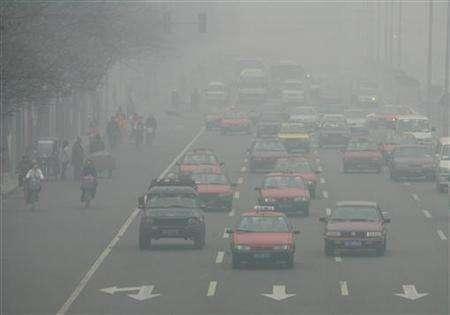
And while it could well be true that dirt isn’t all that dirty, it’s not just dirt that makes China dirty. Which brings us to a larger point about China in general. Like Li’s court, it’s dirty as hell. The polluted air is what you hear about when people talk of how dirty China is, and that’s not an exaggeration. But now that I’ve been here for 10 months, the smog’s not even what bothers me anymore. It’s the dirtiness, the germiness.

I came to China a little on the OCD side about germs. But instead of curing me of my germ aversion, China has merely made me more sensitive to it. And there are any number of things that Chinese people do that are downright gross. (Having now reread this post, I don’t know if there is any way for me to make this not sound discriminatory: the Chinese do a lot of gross stuff. But at the same time, I don’t know if there is any way to dispute the claim that, by the American standards I grew up with, it’s not true. That’s not to say the Chinese are stupid or mean or savage or lesser. I’m just saying that they have some tendencies that would never fly in America – just like Americans have tendencies that wouldn’t fly in China. I know that I am speaking from an American viewpoint, not a privileged viewpoint. Heck, maybe America is just too sensitive to cleanliness. This article and this article seem to hint at just that.)

You can’t walk one block on any remotely-populated street and not hear someone make a deep, guttural hacking sound – a telltale prelude to a huge loogy. Just yesterday I got off a train (I spent the last 10 days in Chengdu, hence the dearth of recent posts), and at the exit gate I looked down to see a pair of stringy, yellow-green clusters of stuff that used to reside in the area between someone’s mouth and lungs. To be fair, at least this person cleared their throat after they got off the train, which is more than can be said for innumerable people who added that putrid, hacking noise to the soundtrack of the 30-hour train ride. And in a land of 300,000,000 smokers, I can assure this is a never ending soundtrack. The staircases at my school, where parents conglomerate to wait for their children, are another hotbed for spitting. Really, all of China is a hotbed for spitting.

Then there is also the move where people blow their noses, but without a handkerchief or Kleenex. They just send the contents of their nose jutting toward the ground. When I was a kid we called this the “Texas Air Hanky.” The last time you saw it was either during a hockey game or on the streets of China.

It is also not uncommon to see little (or big) piles of vomit resting at the base of a tree. If you have to puke then you have to puke; I get that. But I’ve seen more ground vomit in my eight months in China than I did in my 24 years in America. And I’ve been to a lot of bars in America.

People are also apt to relieve themselves on sidewalks. “People” in this case could mean everyone from itty-bitty toddlers (who wear crotch-less pants for quick and painless popping-and-squatting) to old men (who know better but just don’t care). Quick story about public relief of the excretory system: my mom, dad and I came to visit my brother in China a few years back, and on a plane from Xian to Guilin, my dad was the odd man out on a seat, stuck sitting on the other side of the aisle from my brother, mom and I, who controlled our own three-seat section of the plane. Pa was wedged next to a little kid who was wearing the bottomless pants. (If you’re having trouble imagining what this looks like, just think if you cut a big oval-shaped hole in your jeans from the top of your zipper, through the legs, back around to the midway point of the seat. Or you could just >look here.) Well, this kid – seated about five-and-a-half inches from my dad – unloads his bowels then and there, right after takeoff. It gets on the mom a little bit, and while it didn’t actually touch pa, he nonetheless got an eyeful of doodoo. It was a cultural experience he could never have had in a land where parents, you know, make their kids wear diapers.

This may all seem like superficial stuff. OK, so there is spit on the ground. So there is a little puke tucked against the base of the occasional tree. So kids relieve themselves everywhere, but who has ever been successful telling a 14-month-old when and where to go? (Anyway, is having a bunch of soiled diapers that much cleaner than the occasional puddle?)

The thing is, it’s not all superficial. The eyesores are accompanied by a host of things are more than just eyesores. It really is dirty – and not just dirt dirty. It’s really dirty.

There are, for instance, no soap dispensers in public restrooms, save nice restaurants. (Beijing and Shanghai pay a little more heed to soap, but like I’ve said, Jinan ain’t no Shanghai.) The bathrooms at our school feature puddles of piss, and soap dispensers with soap that’s so watered-down it surely houses more germs than it prevents.

And it isn’t just our crummy school. It’s the country at large. There wasn’t a drop of soap on the train I got off yesterday. The people who handle the food you buy off the street don’t wear gloves on their hands – just a discernable layer of brownish crud that can’t possibly be clean. And those Texas Air Hankies don’t just happen on the street. The last time I went to McDonald’s someone was pulling the time-trusted maneuver in the sink in the dining area.

Like so many of the things I talk about on this blog, the germiness of China is hard to quantify (heck, germiness isn’t even a real word). How the Chinese are always drinking hot water, how much the Chinese like to stretch, how much counterfeit clothing there is: these things are all observable, but not necessarily measurable.

The same goes for the sanitation conditions. I haven’t the scientific prowess to conduct a study of the actual germiness of China – just the time and inclination to write about it and to make up words to describe it.

But even if I can’t convey in any sort of statistical way just how germy it is in China, I can rehash an event that beats home the sanitation issue.

After a 24-hour trip that started in Kansas City, I landed in Beijing in early September. If you recall, early September was at the height of the H1N1 craze – that is, the Pig Flu craze – and people were all in a tizzy about it. Especially in China. This article, for instance, entitled “China faces grim situation as H1N1 escalates,” was published the very day I landed in China. The country took to quarantining people – like this guy, a professor from the University of Michigan, and this guy, the mayor of a major U.S. city. If you rode on a plane with someone who turned out to be sick, you could be quarantined. If you coughed a little bit too much, you could be quarantined. If you looked extra fatigued, you could be quarantined.

As another precaution, there was a rapid spread of what looked like little plastic handguns that, when stuck up to someone’s forehead, gave a quick temperature scan. One of these guns/thermometers was pressed against my forehead as I exited the plane in Beijing. I was a little bit nervous, because anything from the mildest of temperature abnormalities to a slight technical malfunction could have landed me in a Chinese quarantine, something I’d rather not see first-hand.

By the grace of God, I waltzed through the sickness-detection chamber A-OK. (I was, after all, in fine health.) But after the lengthy flight and comp coffee, I needed to hit a bathroom when I got on the ground, so I headed for the nearest bathroom. It was just like an American airport bathroom – a cavernous room with urinal upon urinal against a teal-green wall. I relieved myself and, when I was heading out, beelined toward the sink to rinse up. The American equivalent to this WC would have had a bounty of soap and a hand sanitizer dispenser as well, just in case you’re too lazy to actually wash. (Even the Kansas City airport has hand sanitizer dispensers, so it can’t be that far-out of an addition. Like I said, I’ve always been a bit of a germophobe, so I notice these things.)

Alas, there was no soap in the bathroom. So one moment I was getting my temperature taken, an obligatory procedure that could well have landed me in a quarantine because Chinese officials are paranoid (justified or not) about the spread of H1N1. The next moment, I am taking a leak in a bathroom that doesn’t have any soap.

Li Ball’s court doesn’t have any soap either.

April 14, 2010

They're Mad Here, Too, I

All sorts of animals have season-triggered rituals – some birds migrate south, some penguins huddle up and breed, and some people can’t keep their minds off college hoops.

The nice weather last week can now officially be called a tease. It was brutally cold this weekend, horrid yesterday, and today, Tuesday, I wake up to find everything pasted with snow. I am sure there will be no basketball today, for even if this predicted high of 32 degrees manages to oust the snow, everything will probably be wet. And if it’s wet in Jinan, then it’ll likely be a nasty wet, a crud-filled wet.

Dirt has a way of spawning here, multiplying like a cancer and seeping into everything – clothes, desktops, eyes, everything. Because of all this sediment, you will be hard-pressed to find a post-rain or post-snow surface that isn’t grimy. It’s funny – cars actually seem to get dirtier after a rain because all the airborne crap starts to stick. This will probably happen to the courts today: they won’t be cleansed by the wetness, they’ll be sullied by it. And regardless, it’s damn cold. I am thinking about going over to the Shandong Normal courts, just out of curiosity to see if any crazies are playing despite the elements. But I seriously doubt it. Too snowy, too wet, too dirty.

Thus, let’s talk not about basketball in China, but basketball in America – or rather, watching basketball in America from China. It is, after all, early March, and early March carries with it an almost religious significance for myself and the American basketball community at large. Religious significance might seem like a melodramatic exaggeration. It’s not. (I just came across this from a recent Sports Illustrated article by Joe Posnanski: “In Kansas – not unlike in Indiana, Kentucky and North Carolina – college basketball is religion.” True fact.)

Now, I promise that this blog will never devolve into a “What am I doing today?!” type of thing. I’m not going to write about where I am traveling to or what my stilly students did in class or how tasty (or nasty) a recent tofu dish was. This is an analysis of how and why basketball is played and enjoyed here in China, and what can be gleaned about Chinese culture via basketball.

But per weather, today does not look like much of a day to play basketball. And per the date – March 9 here, March 8 in the U.S. – it is a perfect day to discuss March Madness. March Madness, after all, is a month-long holiday that has defined early spring for as long as I can remember, and this is the first time ever that I am not Stateside to witness the proceedings. The only other time that I spent months away from America was when I studied abroad as a college junior. Alas, I did that in the fall semester; not wanting to miss the NCAA Tournament was a serious consideration in choosing the fall.

Despite being thousands and thousands of miles away, I’m finding myself, as always, infected by March Madness. All sorts of animals have season-triggered rituals – some birds migrate south, some penguins huddle up and breed, and some people can’t keep their minds off college hoops.

I may be in China, but I have nonetheless kept painstaking tabs on college basketball this season. There is a network of Web sites that have allowed me to watch as many games as I please. Now, I don’t know exactly how it works, but somehow or another basketball nuts are connecting their computers to their TVs and streaming – in sometimes startling clarity – the goings-on of all sorts of sporting events. Sites like ChannelSurfing.net and Justin.tv and DailySportsLive.com have allowed me to indulge in online broadcasts of the same games that I would be watching back home. (And the fact that newspapers are all online, and for the most part all free, allows me to ingest all the news and analysis I care to. It’s ironic, in a way: newspapers’ irrationally charitable attitude about giving away content on the Web helped kill them financially and is one of the factors that prevented me from ever getting a job. Now it’s one of the things that keeps me sane.)

Indeed, this is a golden era of online media: technology has raced past the laws governing it. After all, I can watch the obscurest of contests and not have paid a single cent to the cable companies that are broadcasting them on television. Nor, for that matter, am I paying subscription fees or giving traffic to Web sites that broadcast games online on the up-and-up, like ESPN.com or BigTenNetwork.com, each of which has extensive, quality options for watching their programming. Think about it. Pretty much every game you watch has that disclaimer about how “The rebroadcast, reproduction or retransmission of this program is prohibited without the express, written consent of the NCAA (or NFL or NBA)…” You may have developed the ability to block out that tired announcement, but it’s there, and it tells you in plain English that circumventing the conventional, licensed television-watching methods is prohibited and indeed illegal. Translation: you aren’t supposed to put this stuff on the Internet.

Well, having those laws is like having a speed limit on some nary-driven gravel road in the vast outskirts of Kansas. The rules aren’t followed, and because the Internet is even more vast and ungoverned than that road in Kansas, they can’t be enforced. (Luckily the Chinese government has let online sports slip through the ever-expanding Great FireWall of China, which restricts access to more than a few Web sites...including this one.) And it’s not just big-time NBA games and the Super Bowl that get broadcast; college basketball abounds. I’ve watched Kansas versus Cornell, Northwestern versus North Carolina State, Missouri versus Vanderbilt. Games litter the Internet, even offbeat, meaningless games with teams like Canisius and Harvard and East Tennessee State.

But what really makes this time of year so great, and what I’m finding I love even though I’m in Jinan, is that there are no more offbeat, meaningless games. The month-long climax of college basketball essentially begins today – well, yesterday in the States – with the first round of conference championship games, and by extension the first round of automatic NCAA Tournament bids. If there are games on TV (or the Internet) that feature obscure teams, those teams are vying for guaranteed berths to the NCAA Tournament.

My morning starts by watching Siena take on Fairfield. Fairfield leads by 15 at one point, but Siena nonetheless forces overtime and punches its third-straight ticket to the Big Dance. After that I write for a while and catch the end of Appalachian State versus Wofford; Wofford prevails (despite almost blowing an 18-point lead), and they, too, are tourney-bound. I love that huge comebacks were staged in each game. It speaks to the fact that these contests are so outrageously important to the players, players who almost certainly won’t play in the NBA, and who almost certainly will get pasted in the first round of the NCAA Tournament.

When you watch, say, App. State take on Wofford, you are seeing these 18-to-22-year-olds at the most dramatic moment of their lives. The players will graduate and become bankers and real estate agents and high school coaches. Yet here they are on national TV, being eagerly watched by basketball nuts all over the country – and world. These games epitomize the transcendence of college basketball – so transcendent, in fact, that an American living in China can’t get enough.

My favorite team isn’t one of these upstarts like Wofford or Siena. Rather, I am pulling for the Kansas Jayhawks, one of the most haughty, tradition-rich programs in the nation. This week the Jayhawks reassumed the No. 1 spot in the polls after a pair of thrashings over archrivals (No. 5 Kansas State and at Missouri). As was the case when KU won its last national title, in 2008, this team is loaded with experienced, NBA-caliber talent. Junior center Cole Aldrich is a surefire top 10 draft pick. Senior point guard Sherron Collins will probably get drafted in the second round (or go make boatloads of dough in Europe). Sophomore forward Marcus Morris is looking more and more like a first-rounder, and freshman wing Xavier Henry – while young – is one of those NBA-ready teenagers whose age belies his talent.

I could go on all day about Kansas. So I’ll just close by saying this: With the madness of March officially starting today, I realize that the distance won’t damper my excitement. Which, depending on how Kansas fairs, could be a blessing or a curse.

April 12, 2010

Trash Springs Eternal

It’s a day packed with the relief of good weather and the realization that more bad weather surely lies ahead.

Turns out weather reports are wrong here, too. March 4, which was supposed to have a high of around 40 with rain showers, has turned into a February 23 incarnate. I start the morning by watching an online stream of the Kansas Jayhawks versus Kansas State Wildcats game (we’ll miss you, Sherron!), then I write for a few hours, and then I realize that sun is pouring into my room. I go outside and realize that, indeed, it is borderline glorious. It feels like spring, and of course, spring means basketball. So off to the courts I go.

I’m not a stranger to the Shandong Normal University campus. Indeed, I was here yesterday, plus I was here about a half-dozen times last fall, before the sun went on its four-month losing streak. But never before have I been struck by how much the campus – at least parts of it – could pass for an American college campus. There are birds and bikes and brick buildings, plus that intangible feel of the university setting. I’ve always thought that college campuses have a certain aura, kind of like some days of the week have a feel to them. There are few places that I’d rather traipse around than a college campus – and even fewer places I’d rather traipse around than a college campus on one of the first beautiful days of the spring. It’s a day packed with the relief of good weather and the realization that more bad weather surely lies ahead.

As I walk up the slight slope leading to the courts, I can see balls looping along the horizon, making that tell-tale arch en route to the basket. I see them before I hear them and am infused with excitement. I was programmed back in college, when I used to break into the campus dome by my lonesome, to expect to play solo. It was a Pavlovian reaction: I would see a basketball court and anticipate solitude, which isn’t necessarily what I want. But today, people are out. Not in droves, per se, but they are out. I’ll be able to play in a game.

I go left upon crossing the entrance gates and plop my stuff down along the 18-inch-high wall running along the court. I am immediately summoned into a game. We gather round and someone starts spinning the ball, letting the laws of physics dictate who will be on whose team. It’s three-on-three, and I am cast into a game before I’ve had the chance to shoot a single shot.

We’re not keeping score, and I notice immediately that my mind is wandering. This is partly because I have trouble getting into these no-score contests, but also because I am looking around, trying to lay the groundwork in my mind for what exactly I want to do with this Web site. I refuse to let this blog devolve into daily play-by-play recaps of my games with these Chinese people – I went eight-for-10 yesterday! Whoo! There are stories here, I know, and I want to tell them. So because I am not yet warmed up, and because these games where no one keeps score are inherently drab for me, I scan the concrete horizon, probing, letting the various scenes sink in.

Two things stand out over everything else: A pair of bottle ladies, and the guy who is selling water and sports drinks. By “bottle ladies” I essentially mean scavengers – ladies who loiter around the courts and collect the discarded plastic bottles of those playing. Indeed, their livelihood and the little old man who sells the bottles are intrinsically tied together; he starts the cycle by selling bottles, and they complete it by picking them up. Right now the bottle ladies are sitting along the nearby wall, about 20 feet down from where I tossed my bag and jacket. One of them is exceptionally old – or at least looks it. The skin on her face has lost every ounce of its elasticity; her cheeks are droopy and wrinkly. Her eyes are hooded, partially eclipsed by the her sagging eyelids. She has her left hand resting on the knee of the other woman, who appears to be in her 50s but, by comparison, looks like a virtual adolescent.

Every five minutes or so, the two ladies rise and go in different directions on the hunt for empty bottles. At one point while I’m playing, I see the elder one approach a row of three guys sitting by the base of our basket. Her gait is tired. She doesn’t drag her feet, but each step is measured. Her hands are clasped behind her back.

The guys sitting on the baseline obviously know what she wants. They’ve likely seen her do this routine before, and if not, the three plastic bottle she has already retrieved are a tip-off. She extends her hand to one of them in a non-verbal request for his empty bottle, and the kid – he’s probably 20…still a kid in my book – flips it at her, end-over-end, like a punt in football. Though she was standing less than three feet away, the toss falls at her feet, hopelessly short. It’s a startling display of disrespect. First off, he could have waited two seconds until she was close enough to simply hand her the bottle. Or, if he was hell-bent on testing his short-range accuracy, he could have at least tossed it waist-high, you know, so she has a chance of catching it. But no. He throws it at her feet, a kind of Eff you to a little old lady collecting bottles. Who knows, maybe she is a real nuisance. Maybe she is a witch to the guys who play basketball. Maybe. But on the surface, it looked like an able-bodied 20-year-old blatantly disrespecting a partially-feeble old woman.

You can find bottle ladies like this all over China. The nation’s recent surge in consumerism has spurred a recent surge in garbage. And this, in turn, has turned trash and recycling into its own business. According to the Web site Facts and Details, China produces 254 millions tons of garbage every year – about one-third of a kilogram per person, per day. That equates to a third of the world’s annual garbage output; not bad for one country, huh? This garbage comes in all shapes and sizes.

Go to any convenience store, and you’ll see various items wrapped four times over. One of my favorite Chinese treats are these long, straw-shaped cookies that are stuffed with a filling of your choice – chocolate or strawberry or whatever. Well, to get to the cookies themselves, you first must bust open the box. Easy enough. Then, though, you must pierce the inner bag which actually houses the cookies. That’s not all. Once you are inside that bag, you’ll see that each cookie is individually wrapped. So that’s one way the trash piles up here – things are packaged to high heaven.

And not just candy. A restaurant that I frequent brings you chopsticks upon arrival. The chopsticks come inside a glossy paper pouch – to get to the utensils, you have to bust open the pouch. Once inside, you’ll also see a few napkins and a moist towelette; the towelette has its own packaging. And that’s just the chopsticks wrapper. The dining experience also comes with a set of glasses and cups and plates – which are shrink-wrapped in yet more plastic. So each time you go to this restaurant, you consume some chopsticks, some paper packaging, a few napkins, plastic shrink wrap and the moist towelette. These are mundane examples compared to the big stuff – mufflers and tires and furniture – but with 1.3 billion people here, little environmental transgressions quickly become big ones.

One common denominator to each of these billion-plus people is the need for water, which means a good chunk of this garbage comes in the form of plastic bottles. The tap water, after all, is undrinkable, and it’s not like there are water fountains in buildings or at parks to steal a quick drink. Plastic bottles, therefore, are ubiquitous.

On the surface, there appears to be some combination of disdain, apathy and ignorance regarding the gratuitous amount of trash in China; I probably shouldn’t have to dig through three layers of packaging to get to my eating utensils. But there is nonetheless a market for that trash to be turned into profit by men and women – like the ones at the court today – who collect it and sell it to recycling companies. And not just plastic bottles: trash bags, tin, rubber and glass are all also hot commodities on the recycling market.

A New York Times article from 2006 chronicled a group of scavengers from a trash dump near Shanghai. One of the scavengers, 46, whose daughter had recently been admitted to an elite school, told the Times: “We worked really hard as laborers before, doing 12- to 15-hour days for a mere few hundred yuan. You have to work even if you are sick or tired. Here we are working for ourselves, and there is a lot more freedom – four to five hours a day, plus we can earn a lot more.” Another scavenger – “garbage picker,” as the article calls him – was a 23-year-old man who supported his 60-year-old father, solely with proceeds made from collecting recyclable trash at this dump. “Don’t be surprised, it’s normal,” he said.

Scavenging for trash is definitely normal at Shandong Normal, where ladies like these can be seen milling about every day. The eldest of the two has returned from her trash-finding expedition and has again parked herself along the wall lining the court. Her friend is still on the prowl.

A few minutes pass and our game is halted by a cell phone-induced timeout. I drain my own bottle of water and walk over to this lady. I hand her the empty bottle. She looks at me with those droopy eyes, clutches the bottle with two hands, says thank you (“Xie xie!”) and tilts her heads and shoulders in the slightest of bows. I essentially just gave her an iota of money, and she seems grateful.

Meanwhile, that old man is still hocking water and drinks. He is always really nice to me, even though our conversations are confined to my piss-poor Chinese vocab and his even worse English vocab. “OK” and “Hello” are the only words he seems to know, and the fact that today he says “Hello” to me as I am leaving casts doubt on how well he understands even those two words. But he knows these courts. He is here literally every time I am, and he is always smiling, always seeming to enjoy himself.

The bottles on his table are impeccably arranged. There are two different brands of water – one with a red cap, the other blue – and each brand is given two identical rows stretching from front to back. Next to the water are two columns of little bottles of Gatorade, and next to those are two columns of big bottles of Gatorade. Naturally, the Gatorade is color-coordinated.

From what I gather, the bottle ladies and the refreshment stand guy are staples of the courts. They have been here every time I’ve been here dating back to last fall, and they seem integral to the proceedings. Without the bottle ladies, bottles would be strewn about everywhere, blowing around in the breeze and adding yet another health hazard to already dangerous list of elements – potholes, cracks, etc. – that players must negotiate. And without the bottle guy, we would all be thirsty – plus the ladies wouldn’t have anything to do. They are part of the fabric that ties together basketball on the courts of Shandong Normal University.

As for the actual basketball on March 4, there really isn’t much to report on. Unlike yesterday, we never graduate onto games where the score is kept, and save a little hot stretch for me, I don’t play particularly well. But it wasn’t a fruitless outing. I took another step toward demystifying my presence at SNU, plus between the bottle ladies and refreshment guy I have a more than a few questions to ask.