Showing posts with label American culture. Show all posts

July 7, 2010

Wasted Possession: Alcohol and Hangovers in China

As a high school sophomore, we had basketball practices every Saturday morning, bright and early at 8 a.m. But just because we practiced early in the morn didn’t mean we were diligently tucked away the night before. Sophomore year, after all, was when fake IDs started floating around, when kids got their licenses to drive, when we started treating the sentence, “Her parents are out of town,” with the same reverence a priest might treat a passage from the Good Book. 

The 8 a.m. start time was likely intended, at least in part, to thwart any Friday night shenanigans. But it didn’t. We still went out, still got drunk, still made silly choices and then paid for it in the morning. A lot of us would go in there with headaches on account of the alcohol, and would then proceed to give our coaches headaches on account of our crappy play.

After one particularly sluggish practice, one of the assistant coaches had us circle up for a little heart-to-heart. Coach Smith, or Smitty, was more of a football coach than basketball coach. He was round through the trunk with buzzed blonde hair, the type of hair you’d see on a drill sergeant or offensive line coach (the latter was his gig in the fall).

“Guys,” he began, “I want to say something about drinking. I know what it’s like being in high school, alright? But you can’t drink on Friday nights and then come out here and think you can play, alright? And I know some of you are drinking. I can smell it out there the second you start running around.”

There was a lightheartedness to this warning, and after the “I can smell it” line we all gave a little chuckle. Despite the district’s militant policy on student athletes and alcohol, we could tell that Smitty wasn’t out to get us in trouble. 

But before he was finished, and before we could go home and crash, Smitty looked right at me and, in front of everyone, said, “Man, you just look like a drinker.” 

I don’t know how exactly a 16-year-old can look like a drinker. Maybe it was because my hair was a little shaggy. Or maybe my eyes were droopy. Or maybe I was a culprit of the sweaty-booze smell Smitty had identified on the court. I don’t know. But as people laughed at Smitty’s observations, I smiled sheepishly and nodded; I was in no position to deny it. (In a Costanzian moment, I realized on the way home that I should have shot back, “Yeah, well you look like a drinker too!” Or at least something about the Jerk Store.)

Anyway, the reason for this anecdote, beside the tenuous link it gives me to place the ensuing words on a basketball blog, is that I wanted to play basketball today. I really did. But it simply wasn’t going to happen. Yes, it was hot, but that’s not why I didn’t ball. And yes, with my pending move to Denmark, and the accompanying logistical headaches that go with it, I have a lot on my mind. But that’s not why I didn’t play, either. 

No, I didn’t play ball today because I got a little, uh, torn last night. And when you tie one on in China, you’re bound to be aching – bad – the next day. Hangovers are of course an international phenomenon. But hangovers in China are a different beast. This is the country that boasts the world’s biggest population, the world’s biggest mountain and, by my estimation, the world’s biggest hangovers. Hangovers that unequivocally prohibit you from playing basketball.

I have been drinking on-and-off since high school (just ask Smitty), which gives me about eight years of drinking experience. I had a Keystone Light phase as a youngster, a Colorado micro brew infatuation when I got to college, a Heineken thing when I studied in the Netherlands, and a longstanding love affair with Budweiser all the while. Oh, and in the months preceding my move to China, I had a little fling with whiskey. Throw in several boxes of Franzia, an ill-fated one-night stand with Long Island Ice Tea and a typically American 21st birthday, and I know what’s what with alcohol and alcohol’s side effects.

I’m not a drunk, but I’ve been drunk. As such, I have a well-honed understanding and appreciation for hangovers. And I’m telling you, there is no hangover like a Chinese hangover. 

One explanation for Chinese hangovers being in a league of their own is that the contents of a bottle of Chinese beer (or booze) are all second-rate: the water, the hops, the wheat, the malt, etc. The Chinese simply don’t seem to pay as much heed to the quality of beer as, say, Americans or the Dutch. Even when I was snatching up every $11.99 30-pack of Keystone I could find as a 16-year-old, there was never a day where I felt as poisoned as I do after drinking Chinese beer. It would require some in-depth investigative journalism (and the ability to speak a lick of Chinese) to really unearth the quality of ingredients that go into your average Chinese beer, but it ain’t high. It’s the same principle, more or less, behind the fact that foreigners who come to China often have bouts of food poisoning and diarrhea: the stuff the people put into their bodies here isn’t quite up to snuff compared with what we’re used to. 

Then there is a more disgusting (and troubling) explanation: the formaldehyde that is put in the beer. Yes, formaldehyde, the stuff they use to preserve dead bodies. Beer-faq.com tackled this issue back in 2007:

First of all, why on earth would breweries knowingly use formaldehyde? As it turns out it is a very inexpensive clarifying agent that lightens the color of the beer and extends its shelf life. Although some Chinese breweries claim that they have discontinued the practice, there are a number of beers sold in China that are very cheap and low quality (intended to be affordable to the masses), and it has been stated that these lower quality brews still use formaldehyde to keep costs down.

So how widespread is the use of formaldehyde in Chinese beer? I found a few articles dating back to 2005, where a representative of the China Alcoholic Drinks Industry Association (CADIA) is quoted as saying that 95% of the domestic beer in China has formaldehyde. What was that? Did you say 95% of domestic beers in China have a known cancer causing agent in them? Not really making me want to drink a Chinese beer.

One reason that Chinese beer is reputed to use formaldehyde is that the malt used in Chinese beer is of such low quality that it could rot otherwise. Or maybe the formaldehyde is used to help clean the bottles and disinfect the beer of any diseases. Either way, it speaks to my first point, that the ingredients in Chinese beer are second-rate: If you have to use formaldehyde as a preservative and cleaning agent, it’s probably an inferior product to begin with.

Another factor contributing to hangovers is the alcohol content of the beer. Chinese beer invariably has a lower alcohol content than in America. For instance, a big 600-ml bottle of Tsingtao – which is the most common medium for the nation’s most common beer – has an alcohol content of 3.1 percent. Other beers hover around that same number; some dip below three percent, none exceed five.

So, why would lower alcohol content make hangovers worse? Well, to achieve the same effect of, say, five 12-ounce American beers, you’d have to drink something like five 20-ounce Chinese beers. Indeed, a 20-ounce bottle at 3.1 percent alcohol has almost exactly as much alcohol as a 12-ounce bottle at five percent, so you have to suck down 100 ounces of Chinese beer to equal 60 ounces of real beer – er, American beer. Thus, when you drink Chinese beer, you’re simply going to ingest more ounces of beer, if not more alcohol. Thus, you’re ingesting more ounces of Chinese water, Chinese malt, Chinese formaldehyde. It’s not the next-day alcohol lingering in your system that causes the vaunted Chinese hangover; it’s all that other crap. But hey, at least if I were to die of a hangover my body would be relatively well-preserved.

Then there is fake alcohol – that is, alcohol that is sold as one thing but, after a swig, is revealed to be something else entirely. This happens with both beer and hard alcohol. One of my co-workers, a 24-year-old from Maryland, has a good story about seeing Pabst Blue Ribbon on a supermarket shelf in China. He was a PBR man in college, and seeing the quintessentially American brew lining a supermarket shelf in Jinan, China, of all places, infused him with a sense of obligation: I have to pay my respects and drink a few.

So that’s what he did – he drank a few, only a few. Yet despite his moderation he awoke the next day with the worst hangover of his life. This wasn’t an issue of drinking a lot (he had but a couple cans). And it wasn’t an issue of drinking a variety of booze (just Pabst). No, it was an issue of the “Pabst Blue Ribbon” being a far cry from the real Pabst Blue Ribbon that has helped broke college kids (and hip 20-somethings) stay buzzed since 1844. This Chinese Pabst was a knockoff that no doubt betrayed the lofty brewing standards set forth by Jacob and Frederick Pabst.

(Another fake alcohol story, if you’ll indulge me. Two guys I know took an overnight train ride a few years back. There are a few different ways in which you can take an overnight train. One is what’s called a soft sleeper, which is a room that has four relatively nice beds and a door to shun the noise and cigarette smoke that invariably fills Chinese trains. Another is a hard sleeper, which is like a soft sleeper but sans the door and with six beds instead of four; it’s a little more crowded, but totally serviceable. If you can’t procure a bed, then you are stuck sitting. My friends were unlucky enough to get stuck sitting. To ease the pain of this 22-hour overnight train ride, these guys bought a bottle of Jack Daniel’s, but because of the putrid taste and immediate nausea, they realized that the Jack was not Jack, but rather one of China’s innumerable fake products. One of my friends was quickly reduced to a floppy mess, and was forced to plop his head down on the table separating himself and the two Chinese people sitting across from him. With his forehead planted on his forearm, and his mouth aligned with the edge of the table, he suddenly vomited the contents of his stomach – a deplorable combination of noodles and Jack Daniels – all over the shared floor. Shortly thereafter he passed out cold, and for the rest of trip there was an stark role reversal: With a puddle of this foreigner’s puke at their feet, the Chinese people were in the odd position of being grossed out by a foreigner.) 

OK, how about some other perspectives on fake booze? This blogger from China rants about fake alcohol thus: 

This is a huge problem in mainland china, not only in Shenzhen, but from my experience i think the major area that its happening, is down here. I have been to places where when you open the bottle it burns your eyes it is so badly, obviously and sickeningly fake.


The poor often drink fake alcohol. There have been many reports of deaths and people going blind attributed to this practice. Poisonous, fake liquor left 40 people dead in Shanxi province in 1998….

Bootleg bottles are also a problem. In a three month period in 1998, 470 people were injured by exploding bottles, including 27 blinded by flying glass. The daughter of migrant workers was killed by glass shrapnel from a bootleg bottle of beer that exploded in Shanghai. The problem was blamed on inferior bottles and bottles that had been recycled too many times.

And a blogger who goes by Beijing Boyce wrote:

I can live with poor service, poor location, poor ambience, even poorly made drinks, but what I can’t live with is bars that lie about their booze….

I’m not alone in these sentiments. Last week, I asked two dozen readers their thoughts about Beijing’s drinking scene (full results in tomorrow’s newsletter). One theme: people are cautious about the alcohol in this city’s bars. Some snippets:

“…we all know about fake alcohol and just how much Beijing bars love the stuff: the situation is so bad in some parts of town that I just flat out to refuse to drink anything that isn’t beer – you just don’t know what you’re getting (and it’s not just small hole in the walls either)….

“Generally, buy stuff in bottles. Especially if you can see the staff open the bottle in front of you – it minimizes the risks of being served god knows what.”

And finally, this 2007 report:

In a check conducted before the May holiday, the Beijing Municipal Department of Industry and Commerce found that over half of the businesses that claim to sell real cigarettes and wine were actually selling counterfeit wines.

The department checked about 400 businesses including peddlers at shopping malls, supermarkets and restaurants before the holiday.

The authorities confiscated 3937 bottles of unqualified alcohol that covered almost all the best-selling brands across China. The Industry and Commerce department has put these enterprises on probation, pending further penalties.

I think fake booze may have been a big part of the problem with my crippling hangover today. After indulging in a mix of beer and wine, a crew of foreign teachers headed to a dance club. This particular club – like many others across China – likes to have foreigners milling about, and they’ll go out of their way to lure foreigners by offering them (us) free booze. When we got the club last night, we were immediately shown a table and gifted a bottle of Eristoff Vodka. Eristoff is, in theory, a “premium” vodka distributed by Bacardi. According to one England publication, “ERISTOFF is a high quality premium vodka - made from 100% pure wheat, triple distilled and charcoal filtered for absolute purity. At 37.5% ABV Eristoff has an exceptionally pure, clean, dry flavour and can be drunk neat or with a wide selection of mixers.” Well, it wasn’t 100 percent anything but nasty. Even as far as vodka goes, it was rank and vile. 

Of course, there is the possibility that I’m just getting a little old for this type of chicanery, for pre-drinking and going to clubs and tearing through bottles of vodka. I am now less than three weeks away from my 25th birthday. At some point, it seems like I’ll have to give up on forays deep into the a.m. 

So, that’s why I didn’t play ball today, and why I am not drinking tonight…or any night in the next several. Tomorrow there should be basketball. Now, though, I must retreat to ibuprofen, sprite and my bed.

June 26, 2010

A Sick Move, II

There is, however, one big drawback to Li Ball’s court: It’s dirty as hell. This uncleanliness is hardly unique to Li’s court.; maybe it’s just more noticeable because there are few other defects. Today one of the regulars has taken a big broom – essentially a long wooden stick with a bunch of wispy bits of straw on the end – and is doing a windshield-wiper motion along the baseline. In the process, he is sending plumes of dust into the air that force people to scatter out of the way. I don’t how much of an impact this has: Even with the housekeeping, whenever anyone takes a dribble, dust is displaced like water that has been struck with a rock.

Now, basketball is hardly a sanitary activity. Really, anytime a bunch of guys are clamoring to handle something (cards, video game controllers, etc.), it pretty much can’t be clean. I get that. But when you look at your hands after playing a few minutes of basketball in China…wow. It’s disgusting.

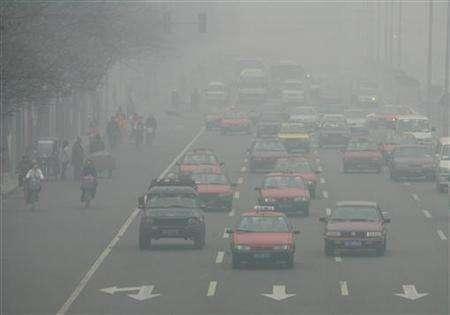
And while it could well be true that dirt isn’t all that dirty, it’s not just dirt that makes China dirty. Which brings us to a larger point about China in general. Like Li’s court, it’s dirty as hell. The polluted air is what you hear about when people talk of how dirty China is, and that’s not an exaggeration. But now that I’ve been here for 10 months, the smog’s not even what bothers me anymore. It’s the dirtiness, the germiness.

I came to China a little on the OCD side about germs. But instead of curing me of my germ aversion, China has merely made me more sensitive to it. And there are any number of things that Chinese people do that are downright gross. (Having now reread this post, I don’t know if there is any way for me to make this not sound discriminatory: the Chinese do a lot of gross stuff. But at the same time, I don’t know if there is any way to dispute the claim that, by the American standards I grew up with, it’s not true. That’s not to say the Chinese are stupid or mean or savage or lesser. I’m just saying that they have some tendencies that would never fly in America – just like Americans have tendencies that wouldn’t fly in China. I know that I am speaking from an American viewpoint, not a privileged viewpoint. Heck, maybe America is just too sensitive to cleanliness. This article and this article seem to hint at just that.)

You can’t walk one block on any remotely-populated street and not hear someone make a deep, guttural hacking sound – a telltale prelude to a huge loogy. Just yesterday I got off a train (I spent the last 10 days in Chengdu, hence the dearth of recent posts), and at the exit gate I looked down to see a pair of stringy, yellow-green clusters of stuff that used to reside in the area between someone’s mouth and lungs. To be fair, at least this person cleared their throat after they got off the train, which is more than can be said for innumerable people who added that putrid, hacking noise to the soundtrack of the 30-hour train ride. And in a land of 300,000,000 smokers, I can assure this is a never ending soundtrack. The staircases at my school, where parents conglomerate to wait for their children, are another hotbed for spitting. Really, all of China is a hotbed for spitting.

Then there is also the move where people blow their noses, but without a handkerchief or Kleenex. They just send the contents of their nose jutting toward the ground. When I was a kid we called this the “Texas Air Hanky.” The last time you saw it was either during a hockey game or on the streets of China.

It is also not uncommon to see little (or big) piles of vomit resting at the base of a tree. If you have to puke then you have to puke; I get that. But I’ve seen more ground vomit in my eight months in China than I did in my 24 years in America. And I’ve been to a lot of bars in America.

People are also apt to relieve themselves on sidewalks. “People” in this case could mean everyone from itty-bitty toddlers (who wear crotch-less pants for quick and painless popping-and-squatting) to old men (who know better but just don’t care). Quick story about public relief of the excretory system: my mom, dad and I came to visit my brother in China a few years back, and on a plane from Xian to Guilin, my dad was the odd man out on a seat, stuck sitting on the other side of the aisle from my brother, mom and I, who controlled our own three-seat section of the plane. Pa was wedged next to a little kid who was wearing the bottomless pants. (If you’re having trouble imagining what this looks like, just think if you cut a big oval-shaped hole in your jeans from the top of your zipper, through the legs, back around to the midway point of the seat. Or you could just >look here.) Well, this kid – seated about five-and-a-half inches from my dad – unloads his bowels then and there, right after takeoff. It gets on the mom a little bit, and while it didn’t actually touch pa, he nonetheless got an eyeful of doodoo. It was a cultural experience he could never have had in a land where parents, you know, make their kids wear diapers.

This may all seem like superficial stuff. OK, so there is spit on the ground. So there is a little puke tucked against the base of the occasional tree. So kids relieve themselves everywhere, but who has ever been successful telling a 14-month-old when and where to go? (Anyway, is having a bunch of soiled diapers that much cleaner than the occasional puddle?)

The thing is, it’s not all superficial. The eyesores are accompanied by a host of things are more than just eyesores. It really is dirty – and not just dirt dirty. It’s really dirty.

There are, for instance, no soap dispensers in public restrooms, save nice restaurants. (Beijing and Shanghai pay a little more heed to soap, but like I’ve said, Jinan ain’t no Shanghai.) The bathrooms at our school feature puddles of piss, and soap dispensers with soap that’s so watered-down it surely houses more germs than it prevents.

And it isn’t just our crummy school. It’s the country at large. There wasn’t a drop of soap on the train I got off yesterday. The people who handle the food you buy off the street don’t wear gloves on their hands – just a discernable layer of brownish crud that can’t possibly be clean. And those Texas Air Hankies don’t just happen on the street. The last time I went to McDonald’s someone was pulling the time-trusted maneuver in the sink in the dining area.

Like so many of the things I talk about on this blog, the germiness of China is hard to quantify (heck, germiness isn’t even a real word). How the Chinese are always drinking hot water, how much the Chinese like to stretch, how much counterfeit clothing there is: these things are all observable, but not necessarily measurable.

The same goes for the sanitation conditions. I haven’t the scientific prowess to conduct a study of the actual germiness of China – just the time and inclination to write about it and to make up words to describe it.

But even if I can’t convey in any sort of statistical way just how germy it is in China, I can rehash an event that beats home the sanitation issue.

After a 24-hour trip that started in Kansas City, I landed in Beijing in early September. If you recall, early September was at the height of the H1N1 craze – that is, the Pig Flu craze – and people were all in a tizzy about it. Especially in China. This article, for instance, entitled “China faces grim situation as H1N1 escalates,” was published the very day I landed in China. The country took to quarantining people – like this guy, a professor from the University of Michigan, and this guy, the mayor of a major U.S. city. If you rode on a plane with someone who turned out to be sick, you could be quarantined. If you coughed a little bit too much, you could be quarantined. If you looked extra fatigued, you could be quarantined.

As another precaution, there was a rapid spread of what looked like little plastic handguns that, when stuck up to someone’s forehead, gave a quick temperature scan. One of these guns/thermometers was pressed against my forehead as I exited the plane in Beijing. I was a little bit nervous, because anything from the mildest of temperature abnormalities to a slight technical malfunction could have landed me in a Chinese quarantine, something I’d rather not see first-hand.

By the grace of God, I waltzed through the sickness-detection chamber A-OK. (I was, after all, in fine health.) But after the lengthy flight and comp coffee, I needed to hit a bathroom when I got on the ground, so I headed for the nearest bathroom. It was just like an American airport bathroom – a cavernous room with urinal upon urinal against a teal-green wall. I relieved myself and, when I was heading out, beelined toward the sink to rinse up. The American equivalent to this WC would have had a bounty of soap and a hand sanitizer dispenser as well, just in case you’re too lazy to actually wash. (Even the Kansas City airport has hand sanitizer dispensers, so it can’t be that far-out of an addition. Like I said, I’ve always been a bit of a germophobe, so I notice these things.)

Alas, there was no soap in the bathroom. So one moment I was getting my temperature taken, an obligatory procedure that could well have landed me in a quarantine because Chinese officials are paranoid (justified or not) about the spread of H1N1. The next moment, I am taking a leak in a bathroom that doesn’t have any soap.

Li Ball’s court doesn’t have any soap either.

June 7, 2010

This Might Be a Stretch, But...

As the warm water begins to replenish my body – much more quickly and efficiently than cold water ever could – I am reminded of a scene from the 1992 classic “White Men Can’t Jump.” Calling it a classic may seem foolish to some, but to basketball fans, especially basketball fans who, like I, saw that movie at an impressionable young age, it’s not a stretch.

The movie boasts some quality basketball scenes, plus it’s freaking funny. To boot, “White Men Can’t Jump” also deftly deals with the black-white divide in basketball, a phenomenon that’s painfully obvious but nary discussed. Whites can dig the movie because the main white character, Billy Hoyle, ultimately has his day in the basketball sun. And blacks, in part, may be drawn to it because the movie’s main black character, Sidney Dean, poignantly unleashes all of the white stereotypes. Plus he can ball.

Hoyle (and whites in general) is portrayed as naïve and, per skin color, out of place playing basketball. Plus his name is Billy Hoyle, which is such a perfect name for a white guy playing inner-city basketball (at least on par in the annals of all-time fictional hoops names with Jimmy Chitwood). Billy Hoyle must have either struck the writers in a split second, or was concocted only after hours and hours of deliberation. That is, Billy Hoyle is the product of either instantaneous genius or painstaking contemplation. It’s too good to be anything else.

Meanwhile, Dean (and blacks in general) is portrayed as needlessly flashy on the basketball court and something of a prick in real life. (“It’s hard work being this good!”…“I don’t mean to brag, but I’m the greatest!”…“Billy, you either smoke, or you get smoked. And you got smoked.”)

Hoyle articulates a sentiment that has crossed many a white minds when he delivers one of the movie’s more memorable quotes – memorable for its bluntness and resonance with basketball players, if not its poetic properties: “A black man would rather look good and lose than look bad and win.”

The goofy title, goofier clothes and unbroken stream of profanity may, to the lay basketball fan, give the movie a flippant feel, like it’s just some cuss-filled comedy starring Wesley Snipes and Woody Harrelson, who between them have been in such hard-hitters as Kingpin and Passenger 57.* But White Men Can’t Jump is more than your run of the mill laugher. In fact, nearly 20 years later and thousands of miles away, here in early June, 2010, on the courts of Jinan, China, “White Men Can’t Jump” still has relevance.

* In fact, Snipes’ movie portfolio has devolved big-time last few years. He was in seven straight films from 2005 to 2008 that were straight-to-video. I guess you take the money where you can get it after you get hit with tax fraud charges and are forced to cut multi-million-dollar checks to the federal government.

Let me reset a scene from the movie. Billy stunned Sidney when the two played for money, and soon thereafter Sidney decides that they should team up for a little hustle. Sidney makes his way to a local court, where Billy is going to meet him, so the duo can dupe some people for money. They don’t have an elaborate scheme for how to work their hustle. Instead, they’re simply going to take advantage of the one thing Billy has that no one else does: white skin. After he has talked a sufficient amount of trash and ruffled a sufficient number of feathers, Sidney declares, “Five-hundred dollars! And you can pick anybody out here. Anybody!” His opponents are enticed. They can choose Sidney’s partner. It’s like they are the captains, but instead of picking the best players, they will simply pick, based on looks, the worst one they can spot.

The target of Sidney’s hustle, a guy named Raymond, scours the on-lookers, trying to find the person who looks least likely to pose a threat in a game that will result in someone pocketing $500. Raymond’s buddy then says, “Hey Raymond, look at the chump, man,” and points at Billy Hoyle, who mosied onto the sidelines while Sidney was busy laying the seeds of this game. “Give him the chump!”

Now, why is Billy such a chump? Well, there is of course the fact that he’s white and has entered an all-black court. There’s that. But there is also the fact that he’s stretching. And despite the physical rigors of basketball – and the coinciding usefulness of a good pre-game stretch – stretching in basketball, in America, isn’t as common as one may think. It is, however, exceedingly common in China, which is why I’m thinking about “White Men Can’t Jump.” (By the way, I am white and can’t jump.)

I have always been a big stretcher. I have back problems, which, along with my current addiction to massages, has prompted me to engage in some serious stretching. There is one stretch in particular, designed for the groin muscle, that is incredibly useful but totally awkward. I stumbled upon it when I was shelving videos at my library job and ended up taking home how-to DVD on yoga. (I worked at a library? Better believe it. Just part of the post-college employment fiasco that has landed me in China in the first place.)

To pull off this stretch, you plant one foot out in front of your body – say, your left foot – with toes facing forward. You bend that knee, and then plant your opposite foot, the right foot, behind you, parallel to the other foot but with the toes perpendicular to the first set of podiatric digits. So, at this point your left foot is in front of you, toes forward, and your right foot is behind you, toes running east-west, so to speak. Your body and face are of course facing the same direction as your back set of toes.

Next, you plant the coinciding hand of your front foot – in this case, the left hand – inside of the front foot, lean forward, and place that elbow against the inside front knee. You then torque your body with that front elbow, trying to swivel your hips around as much as you can. The resulting pull on one’s groin muscle – the groin of the front leg – is incredible. For added leverage, it helps to do the stretch close to a wall. Then, as you torque your body with the elbow of that planted hand, you can grasp at the wall with your other hand and yank a little bit more. It’s a killer stretch. (Describing it, however, may be beyond my literary acumen, so please don’t hurt yourself.)

As good as this stretch may be, though, it’s hopelessly awkward. Think about it. Your legs are stretched wide, and your feet are facing opposite directions. You are twisting your body with whatever force you can muster from your elbow, which is buried on the inside of your leg. And if, like me, you are looking for a little extra
oomph, you are grasping at the nearest wall to corkscrew yourself even further. I used to do this stretch at the 96.5-percent-black gym I played at in the months after college, and I’d get more than a few stares. Just like people were starting at Billy Hoyle. Come to thin of it, this stretch may have been one reason that one particular player at my old gym took to calling me Billy Hoyle. I think he meant it is as an insult, but I of course took it as a compliment.

(It’s been my experience that stretching is a little more common among whites – and not just Billy Hoyle. My intramural basketball team used to get our stretch on before every game, even indulging one another in some partner stretches. Our favorite was one where two people sit down with their legs stretched in front of them, toes pointing toward the sky. You then press your feet against one another’s, and reach out and grab the other guy’s hands. One person then yanks the other forward – wait, maybe yank isn’t the best word to use when describing this…how about pulls. That’s a little better. Anyway, one person pulls the other, and then the visa-versa. I’ve never seen anyone doing this besides my old IM team, but the point is that whites, in my estimation, are a little less abashed about stretching than blacks.)

But whites are nothing compared to the Chinese, for the Chinese possess a zest for stretching that I had never seen before. This is, after all, a country that is known for massages, and it’s the nation which spawned Tai Chi, so the harmony and sanctity of one’s skeletal structure is treated with more reverence here – at least historically – than in pretty much any country in the world. (That is to say nothing of how they treat their lungs.)

You can see this affinity for stretching everywhere. Often times people will wave and flap their arms while they walk down the street, treating the sidewalk like a hitter may treat an on-deck circle. It’s also common to see Chinese people plop a foot upon a railing or wall and use it as a sort of stretching device. And then there are the ubiquitous exercise stations that line sidewalks all over this city and others throughout China.

Not surprinisngly, this stretching frenzy manifests on basketball courts, which serve as yet another venue in which the Chinese get their stretch on. On this day, there are any number of stretches going on at Shandong Normal U. There is the old standard where you stand with your legs spreads wide and lean forward to touch the ground. There are the arm flaps that are so wildly popular here. And there is one that my friend from America, who had chronic knee problems, used to do where you place your fingertips on your kneecap and gently move it around, almost swirling it, like your ACL is a rubber band that you’re are trying to give a few extra centimeters of elasticity.

As is the case with the warm water, I have wholeheartedly embraced this facet of Chinese culture. Like I said earlier, I have back problems, and I have for years been doing the types of quick, quirky stretches that people do here – the exaggerated shoulder shrugs, touching my toes, lunging and twisting and rubbing. I don’t know if this means I have a kindled spirit here, but maybe some kindled skeletons.

ALSO: I appreciate comments on this blog, but one of the many annoyances of publishing a blog from China is that I am apparently unable to leave comments. I do not know what is up with that; I do not know, for instance, why I can (sometimes) sign in and publish a post but cannot leave a comment. I have tried multiple proxies, and none allow me to comment. I do not want to seem like an ingrate by not responding, or like I do not care, or have not noticed; I am not, I do, and I have. I just have not yet figured out how to leave comments. I am glad that you have, though, so please continue to!

June 2, 2010

Some Like It Hot -- Water, That Is

The first thing I see when I get to Shandong Normal University is a troop of students wearing black caps and gowns. They are snapping photos of one another with those glowing, We Just Graduated! smiles. It reminds me of my own graduation a couple years back. I reckon it’s a commonly held sentiment, but the weeks right before and right after graduation are unforgettable for all the right reasons. These students (or ex-students) are smack-dab in the middle of that two-week stretch, and it’s fun to see.

I roar past them on my embarrassingly loud bike, leaving a trail of pungent, almost sour white smoke in my stead. I would love to see the carbon footprint of my motor bike, which is as loud as a racecar but as weak as the 240 yuan piece of junk it is. It burns oil and gas like a Chevy Suburban, and I fear that I will eventually be treated to a dastardly karmic payback – retribution for the oodles of crap I pumped into the air during my year in China. At the very least, I am doing a number on my respiratory system, as well as the lungs of any poor sap who happens to be behind me on the road. 

The bike doesn’t have a key, so when I park it next to the courts, I don’t turn it off so much as it just kind of winds down, groans and eventually goes to sleep. It’s like a computer that hasn’t been used for a few minutes, seemingly programmed to recognize when its work it over and react accordingly. Miraculously, it usually starts again when its rest is over. 

I traverse the ten feet to the gate, surveying the sparse action on the courts. It’s dead. There is one four-on-four game going, one three-on-three contest and then a few people just sitting around. I make a note of this desolateness and approach a guy who is sitting by himself at the base of a goal. He is resting in the shade with his legs stretched out and his back parked against the green metal pole that loops from the backboard into the ground.

I ask him if I can use his ball by saying, “Keyi bu keyi?” which literally means, “Can no can?” I don’t know if this is proper way to make the inquiry, but he seems to understand and lofts the ball into my waiting hands. I shoot plant-footed 8-footers for a few minutes and then lace up my kicks to take some earnest jump shots. It’s annoying, but I can’t help but think about Kobe Bryant as I’m shooting. The jump-shooting display he put on in the Lakers’ Western Conference-clinching win in Phoenix the other day was otherworldly, stuck in my mind like a great line may get planted in a poet’s mind. I hate Kobe, but when it comes to shooters jumpers, he is probably the best person on the planet to emulate. He is the Hemingway of jump shots: Hemingway was a drunk and by all accounts not a very nice person; Kobe is a pompous, lecherous prick. But my god, they are both good.

Sneakers snugly tightened, I do my best Kobe impersonation, shooting awkward, twisting jump shots just like he does. It strikes me that I’m 24 years-old and still fantasizing that I am a real basketball player, but I keep on going. I shoot by myself for a while before a few other guys who are about 20 years-old join me. We shoot lazily, and I notice that I am instinctively giving them their change when they hit a shot. As I’ve written in the past, the concept of giving someone their change is lost on Chinese players, but, just like it’s ingrained in me to pretend that I’m a famous player when I shoot around, it’s ingrained in me to give dudes their change.

After a few minutes, Wang, the Refreshment Man, hits the scene. He rolls up in what can best be described as a flatbed bike. There is one wheel out in front, like a normal bike, and not one, but two wheels in back, supporting a four-by-four deck. You see these flatbed bikes all over China. Sometimes people load them with recyclable trash; sometimes they’re rolling around with mini-kegs being delivered to a restaurant; sometimes there are people chilling back there. Befitting of his title of Refreshment Man, Wang is hauling a few hundred water bottles, packaged up in cases of 24.

Since we’re not playing a game, and are instead still just shooting around, I grab a buck and waltz over. He spots me as he’s unloading the cases and says, “OK!” Wang is about 50, probably 5-foot-6, and appears to be kind of doughy, like you wouldn’t get much resistance if you gave him a little poke. He is generally wearing a smile, as he is today. I respond with an OK! of my own and ask him for a water. He snares a bottle from his limitless bounty and hands it to me. I thank him in Chinese, to which he replies, “OK!” I turn back to the court and take a hardy gulp, and into my mouth rushes a quenching dose of crisp, clean, hot water.

Back home I would have scoffed at the idea of drinking warm water, especially while playing ball. At the gym that my friends and I most frequented in Kansas City, we used to have a specific water fountain that we’d head to between games. We passed three different fountains on the way to this magic fountain because its supply of H2O seemed to be about 15 degrees cooler than everywhere else. It was one of two fountains set into a wall down the hall from the courts, and there were times when my friends and I would patiently wait in line for this fountain while its twin fountain four inches away sat unused. But again, the colder the better. (I have a theory that, when there are two water fountains side by side, the one that is lower is always colder. Just drink for thought…)

Here, though, there aren’t water fountains. Nor, for that matter, is there cold water. It is one of the things that struck me as odd when I first arrived. But the Chinese are convinced that it’s good for health to drink warm water, and I’ve wholeheartedly bought in. (The Chinese are convinced of other things, as well, that I don’t subscribe to, like that walking backwards is good for your brain. It’s not unusual to see people walking backwards on sidewalks in the early morning. The Chinese are also huge fans of open windows. Even in the dead of winter, I would often walk into my classrooms only to see that my students had thrown the window wide open. As it was explained to me, Chinese people think it’s really bad to have the air in a room stagnate, so they open windows to get things circulating – even if it’s like 25 degrees outside. It’s unclear to me whether or not they think it’s unhealthy to sit in a freezing room. I haven’t, and won’t, buy into that one, nor will you ever find me walking backward.)

But the warm water? I’m hooked, as are the other 1.3 billion people who live here. And whether or not you think they’re legitimate, there are reasons behind the warm water obsession. As a blogger for the Global Times put it:

The abundance of hot water in China is also connected to Chinese medicine. It is better, according to Eastern wisdom, to drink hot water for the sake of digestion, and overall health. Water with ice in it can take longer for the stomach to digest since the body first has to expend energy to heat the water up to body temperature.

Others take it even further:

Some evidence suggests that by drinking hot water, we remove built up deposits in our nervous system. These deposits are responsible for creating negative thoughts and emotions. By removing these build ups, we can help to purify our thoughts and put us in a better emotional state. Drinking hot water can also actually purify the toxins out of your body….

And others take it even further:

Cold water can also in extreme circumstances lead to heart attacks. As we have our meals enzymes and acid secretions start and this process sort of warms up the body. Drinking cold water is like attacking the body with an exactly opposite temperature. Not only does the whole procedure of digestion gets interrupted or slows down, the body can also react in the form of a heart attack. It does not always come after a pain in the right arm or pain in the chest…

That’s not all…

Drinking hot water after meals reduces cancer risk. Let me explain how. Drinking cold water will solidify the oil part of the food we have eaten. This will slow down the digestion process. And when this sludge reacts with the digestive enzymes and acids, it will break down and will start getting absorbed by the intestine faster than the solid food. This lines the intestine. The consequence is that this will turn into fats and lead to cancer. Therefore it is best to drink hot soup or warm water after a meal.

Hot water has even been used as a legal alibi. A suspected thief died in February while being detained by authorities. The family was suspicious of the cause of death, but the police officers insisted that he “died suddenly while drinking hot water.”

I don’t necessarily buy in to these more far-flung reasons for drinking warm water – that it can reduce stress and help thwart cancer. But I do think there is credence to the suggestion that cold water is harder for your body to process because your body must warm it up in order to “use” it. It’s admittedly odd, but even on a day like today, the first day of June with the sun blaring, I don’t want cold water. If Wang had had a bucket filled with ice, and slipped bottles of water in there to make them cold, I would have grabbed one of the non-iced bottle that – like the one he gave me – had been baked by the sun. I’m done with cold water.

May 26, 2010

No South Paws in the Far East

There are any number of things that induce giggle-fits from the young’uns I teach. For instance, they invariably get a kick out of it when I stroll into class with coffee, which is a relatively recent addition to China’s beverage market (but a long-standing staple of my diet). And there is a virtual riot whenever we play a game and one of the teams’ point totals lands on 250, or “er bai wu.” In China, er bai wu is akin to an insult, derived (apparently) from ancient China when strings of currency were always lumped 500 at a time. Therefore, if you are er bai wu, you are essentially half a person. It’d be like calling someone an idiot.

Another teacher, who happens to be left-handed, told me that her left-handedness is nothing less than a point of amazement in her classrooms. When she wrote her name on the board on the first day of the term, the kids in each of her classes flipped. At first she didn’t understand what was so funny. Was it her handwriting? Was there something stuck to the back of her pants? But when she asked, she was told that it was simply the fact that she’s left-handed. Because in China, there aren’t lefties.

Well, that’s only partially true. Genetically speaking, there are indeed lefties. Roughly 11 percent of human beings are left-handed, whether they’re born in China or America or Cambodia or wherever. Thus, there are roughly 130 million people here who are technically left-handed. But if a child has a physical preference toward being left-handed, then they are trained from a young age to spurn that tendency and use their right hand, which, in China, is the right hand to use.

The blogger Ben Ross rehashed a conversation that he had with a Chinese-born gentleman who had moved to America.

…When the conversation turned to culture shock, I asked him what he thought was the strangest thing he saw when he first came to the US.

“Left handed people,” he replied without any hesitation.

“You don’t have left-handed people in China?” I inquired, making sure I hadn’t mistranslated his words.

“Nope, I had never seen anybody write with their left hand until I came to the US” he said.

“How is that possible?” I asked, “Isn’t that genetic?”

“Maybe so, but in China kids are all taught to write with their right hands. If they pick up a pencil with their left hand, the teacher will put it in their right. It’s really just a matter of practicality. In the US, you have left-handed desks, left-handed guitars, and all sorts of other left-handed devices, but in China we have none of the sort. It works out better that way I think, no need to manufacture two different kinds of something when only one is necessary.”


His story is corroborated by Wikipedia:

In ancient China, the left has been the “bad” side. The adjective "left" (Chinese character: , Mandarin: zuǒ) means “improper” or “out of accord”. For instance, the phrase “left path” (左道, Mandarin: zuǒdao) stands for illegal or immoral means. The character for “left”, depicts a left hand attending to work. In contrast, the character for “right”, (Mandarin: yòu) depicts a right hand in relation to the mouth, suggesting the act of eating.

One more anecdote, from the China Economics Blog:

One game that some colleagues and I play when undertaking 3 hour exam invigilations in the UK is to count the number of left handed students. When there are 100 students you usually end up with around 10%. This has been fairly consistent over the years.

Imagine my surprise therefore to hear that there are no left handed people in China.

Of course, there is nary a better manifestation of one’s preferred hand than the jump shot. After all, the jump shot – or at least the act of shooting, be it a free throw or set shot – is basketball’s intrinsic act. There is nothing like it in any other sport, and you can only do it with your strong hand. There are a lot of things in sports that you can do with either hand. In football, you can (and should) tote the ball with both hands, and on defense, tackling is a full-body endeavor. In baseball, many players can switch hit. And save moments when players wind up for slap shots, I can’t tell what’s going in hockey. Sure, you can do things with both hands in basketball, like dribbling and passing. But you can’t shoot a jumper with both hands. 

Like most of the Chinese, I play with my right hand. Unlike the Chinese, I sport Zack Greinke T-shirt jerseys and Florida State basketball shorts.

I’m thinking about handedness while I watch Game 4 of the Western Conference semis between the Lakers and Suns. Of the 10 starters, there is one lefty, Lakers point guard Derek Fisher, who has a ceiling-scraping jump shot that flies so high out of his left hand that it seems there is no way it could possibly find the net. (All too often, it does.) Thus, the starting lineups are reflective of the general population – exactly 10 percent are left-handed.

The percentage is exceeded, however, when the backups spell the starters. Off the Lakers bench comes Lamar Odom, a lefty, and the Suns send left-handed Yugoslavian Goran Dragic in for Steve Nash. All told, 19 players play in Game 4, and three of them – or about 16 percent – are left-handed. 

Nineteen is a pretty small sample size, though, so let’s look at the Eastern Conference Finals as well. In Game 4 of the dud series between Orlando and Boston, not one of the 20 players who took the court was left-handed – or, none of them played left-handed. One of them, though, Dwight Howard, was actually born left-handed. From his Web site:

A lot of people don’t know it, but when I was growing up I was totally left-handed. I wrote left-handed, held a fork left-handed and shot the ball left-handed.

But when I was in the eighth grade I tried to dunk on a guy and he undercut me and I landed on my left hand and broke my left wrist. After that, I taught myself to write with my right hand, eat right-handed and shoot the basketball with my right hand.

(Unfortunately for Orlando, he never figured out how to shoot a free throw with his right hand; he’s a 59.9 percent career free throw shooter. He missed five free throws in each of the first two games of the Boston series, and the Magic lost by three in each game.)

If you include Howard as a lefty, then four of the 39 players who played in each series’ respective Game 4s were left-handed. That’s 10.25 percent, or almost exactly the same percentage as the general population. I reckon that this percentage holds up on courts all over America. I can’t say for sure because I was never scrapping for things to blog about in America (and therefore never studying which hand people were using to loft shots at the goal). But I think one out of 10 seems about right. I know my intramural team in college had one lefty. I know that the gym I used to frequent in Kansas City boasted the occasional lefty, and I know that the Kansas Jayhawks had one lefty last season (Xavier Henry). I never kept tabs on this back in States, but I would say that, as is the case in the NBA playoffs, about 10 percent of U.S. ballers I played with were left-handed. 

This kid in Beijing shot right-handed, even if he shot on monkey bars and not a basket.

I want to keep tabs this afternoon, however, so I set out for a little anthropological study. I dart over to Shandong Normal at about 4:30, fighting rush hour traffic on my crummy little motor bike all the while. It takes little more than a single taxi ride in China to realize that drivers here are crazy, at least crazy in sense that they operate with inches the way drivers in the States operate with feet. If you planted an American driver behind the wheel in a Chinese city (myself included), they’d get in a wreck within minutes. Conversely, if you put a Chinese driver in American suburb, they might go crazy because there isn’t enough traffic. I knew that traffic here was bonkers the moment I left the Beijing airport. But until I got my motor bike, I didn’t realize exactly how crazy it was; now it is up-close. And because my bike doesn’t really have breaks – I keep an old pair of shoes in the basket and an angel on my shoulder – it’s all the more precarious. If this blog ever suddenly ceases, Chinese traffic may be the culprit.

The girls play right-handed, too.

Anyway, I make it to Shandong Normal easily enough. There is a huge gaggle of people watching a women’s basketball game being held on one of the courts nearest the front gate. I have never seen women play full-court games in China, let alone witnessed an all-girl duel with spectators lining the sidelines making all sorts of noise, so this is unusual. (There will likely be a post devoted to women’s basketball at a future date…) But I’m not worried about the sex of the players, just the hand they’re using to shoot. And which one was it? Right, right, right. There are a few of them who are savvy with their left-handed dribble, but no one is shooting left-handed.

I then move on to the other courts, occupied by guys, to take in some half-court four-on-four games. I mosey around for about 25 minutes – not trying to get into a game, not seeking out English speakers, just watching for those hands. Over the course of my nearly half-hour of watching jump shots, I see one guy shoot left-handed. One. I don’t know exactly many people I saw shoot, but I know that, between the ladies and the guys, I saw at least 50 or 60 people heave shots, and one was left-handed. Definitely not 10 or 11 percent. 

The one lefty!
After I do my highly unscientific research at Shandong Normal, I ride back home to play with a friend who recently got back from a jaunt to Qingdao. We walk to the courts that we share with our annoying co-habitants from the boarding school, passing a pair of four-on-four games. (There are no lefties.)

Within moments, a hoard of kids comes over and asks us to play. We begrudgingly comply, and proceed to play our own four-on-four games. This adds eight more people to the sample size, and no one is left-handed. That makes it close to 60 or 70 different people who I have seen launch shots today, and only one is left-handed. There must be more left-handed people than this one guy.

I’ll keep an eye out for more lefties in the future, but the early returns are that there aren’t a lot of lefties. But hey, that’s all right.

May 25, 2010

Up Fake: China’s Booming Fake NBA Market

Today I wake up at 6:45, drink some coffee that makes me yearn for Starbucks, write for a different Web site and sit down to watch the Suns and the Lakers play Game 3 of the Western Conference Finals.

The Suns fended off L.A. behind 17 points and 15 assists from Steve Nash, making the series 2-1 and, with Boston already up 3-0 on Orlando, sparing the NBA the ominous possibility of dual sweeps in the Eastern and Western Conference Finals (on the heels, no less, of sweeps in three of the four conference semis).

After that, I text Li Ball and ask if he and the gang are going to play any ball today. Five o’clock, he texts back. I write until five and bike over to the courts.

We shoot around for a bit and I hop in the first game. No one is keeping score, but after about 20 minutes the hoard of players waiting to play goes from zero to six, and scorekeeping is invoked to regulate playing time. There are a variety of players waiting – a young guy who couldn’t have been older than 20, a few old guys built like houses, a 30-something who, from the smell of things, had been drinking prior to his arrival. 

And then there was one dude wearing a Minnesota Timberwolves jersey. He caught my eye for a few reasons. First, you don’t often see Minnesota Timberwolves jerseys here. Cleveland and Boston and definitely the Lakers, but not Minnesota. They don’t have any transcendent stars (sorry, Kevin Love), it isn’t a major city (just ask Ricky Rubio), and they were horrible last season (15-67 horrible, lost-their-last-seven-games horrible).

The other reason I notice this guy’s Timberwolves jersey is because it doesn’t say Timberwolves. It says “Tim erwolves,” with a gap where the B should have been. That there is either a typo or the thing is falling apart suggests one thing: the jersey is, in Chinese parlance, jiade. Fake.

Jiade clothes in China are everywhere. At the end of my shopping expedition today I was toting a “Ralph Lauren” shirt and a pair of “adidas” soccer jerseys. Those quotation marks are necessary, because while the tag says one thing, you are no doubt buying another. The Polo shirt, for instance, ran me a total of 39 yuan (less than $6). You can’t buy Ralph Lauren shirts for $6. The jerseys were a steal too. Here is one of the ones I bought, the Spanish national team road kit.


It came equipped with adidas tags, and it has that bright yellow adidas emblem right below the neck. Heck, it even says “climacool” on it, signifying that it is part of adidas’ high-priced climacool line of technologically advanced sports gear. It looks and feels real. Trust me, though, it’s not adidas; it’s jiade. Proof? It cost me 60 yuan. In the real world, it costs $70 USD, or roughly eight times what I bought it for.

China’s fake-clothing (and fake-everything) industry has been reported ad nauseum. Reuters wrote this article about counterfeit items – including DVDs that hit the shelves before movies hit the theatres – well over a year ago. The Seattle Times wrote this two-parter in 2006, as George W. Bush was preparing to land in China to deliver a “stern message to Chinese officials about the need to crack down on knockoffs of U.S. products” and pound home the assertion that “90 percent of all intellectual property in China is pirated.” This photo gallery was posted in 2007, showing how a traveler to China can find authentic “Paradi” clothing, “PenesamiG” batteries, and even “Sccoby” shirts (if you like the timeless comic strip Peanuts). And one of my favorites: someone posted this query on Yahoo! Answers, asking, “Where can I find fake clothes in Shanghai?” One of the respondents simply answered, “everywhere”.

(On a personal note…a while back I bought every single episode of Seinfeld, The Simpsons, South Park and The West Wing from a jiade DVD market. The total cost ran me about 50 yuan, or less than $8. That bounty would have cost me close to a few thousand dollars in America. Just think: at the time, The Simpsons had 17 seasons, and if you went to Best Buy or some other outlet, it’d be $40 per season. The Simpsons alone, therefore, would have cost me right about $700. South Park had at least a dozen seasons; that’d be $450 worth of discs. Seinfeld had nine seasons, or about $350, and the West Wing had seven season, or about $300. Add it up, and we’re talking about a lot of money. And still I got it all for eight bucks. Sure, the Chinese versions of these DVDs don’t have director commentaries, and they aren’t as sharp visually. But we’re not talking about watching Avatar or the Super Bowl. We’re talking about The Simpsons and Seinfeld. Hi-def isn’t important. Plus the jiade discs come complete with funny attempts at English like PALY AL instead of PLAY ALL, or DIC NE instead of DISC ONE.)

So yeah, China’s counterfeit industries – from clothing to DVDs to electronic goods – is and has been booming. And that boom has been chronicled for years.

But the one sub-sect of the jiade industry that is especially interesting to me (and pertinent to this blog) is the NBA basketball merchandise: shoes, jerseys and T-shirts, not to mention the NBA itself and its most prized commodity, the players. You can find all sorts of basketball stuff in China that is egregiously counterfeit. I’ll let the pictures do the talking.


This is a Kobe Bryant shirt that I saw in Yangshuo. It looks normal enough, right? Well, there’s one problem. Bryant and adidas, which supposedly produced the shirt, parted ways in 2002. This shirt, therefore, is an infringement on Kobe’s current contract with Nike. Or it would be an infringement if it were the least bit real. (The NBA logo is thrown in just to make sure the maximum number of entities are being had.)


Like that Bryant shirt, these socks look pretty legit. The packaging is adorned by the NBA’s best young player, LeBron James, and those Nike and adidas logos look pretty darn real. Therein lies the problem: Nike and adidas…sharing identical packaging…and sharing the same player. Not likely. As with Bryant, LeBron inked a bajillion dollar deal with Nike, a deal which prohibits his likeness from being used by adidas to sell products. Of course, this isn’t adidas’ doing. (Quick note on LeBron’s contract with Nike. It was a seven-year deal completed in May of 2003 when LeBron was 18 years-old, and it was worth $90 million. Not only was LeBron 18, but he was more than a month away from even being drafted. I still find that unthinkable. All of it. Especially the fact he was 18.)


Notice anything wrong here? Nike packaging for a pair of socks that aren’t Nike. The logo resembles that of Saucony, but I really can’t be sure. Whatever it is, it isn’t Nike.


Here’s Kobe Bryant’s mug being used to sell some unlicensed merchandise.


The NBA is getting ripped off in all of these pictures because both its logo and players are being strewn about products that aren’t legitimate. But this one is especially egregious. Notice that there are three different companies, side by side, whoring out the NBA logo. Jerry West would be ticked.


Not only does this guy bear a striking resemblance to Frederick Sykes, but he is wearing some jiade clothing as well. If you go here, you’ll see that all L.A. Lakers gear is manufactured by adidas, even lame T-shirts that say stuff like “Where The Black Mamba Strikes.” I say we put Dr. Richard Kimble on the case.


I just can’t believe that the NBA or the Chicago Bulls would sanction this abomination: a quasi-cowboy hat with a huge Bull on it. Everyone who won all those Bulls championships – Jordan and Pippen and Jackson and the crew – is still alive. But when one of them dies, he will roll over in his grave because of this.


Finally, the Mother Lode. An entire wall lined with fake jerseys. Here we have, from left to right, LeBron, Carmelo, KG, Kobe, Derrick Rose and, cut off because the cameraman is a hack, an old Allen Iverson 76ers jersey. Unlike that previous pic of the Lakers jersey that had no brand logo, these jiade jersey are adorned by adidas’ three stripes. 

Alas, they’re all fake. They sell for 150 yuan, or about $22. Online, adidas sells these for $79.99. And it’s not like adidas is philanthropic in China and simply hooks up the citizenry. I’ve bought two pairs of adidas shoes here – real shoes, from a real adidas outlet store – and the conversion is exactly one-to-one. For instance, the Derrick Rose basketball kicks I bought last November were about 700 yuan, or a hair over $100. That’s precisely what they would be back home.

I’m not interested in philosophizing about the morality of counterfeit NBA gear (or counterfeit anything). You can argue (quite successfully) whatever point you want. On the one hand, sure, it’s ripping people off. It’s screwing Kobe and LeBron and the NBA out of royalties that, legally, should be theirs. In that sense, it is immoral. But at the same time, it’s hard to feel too sorry for these multimillionaires missing out on a slice of their jersey sales, jerseys that are priced through the roof because these guys likely wouldn’t have signed their respective deals for anything less than the GDP-sized sums they did. 

Plus, these products are good for the Chinese economy. People have jobs making this bogus merchandise, and regular Chinese citizens – most of whom aren’t rich enough to pay $80 USD for a shirt – can rock their favorite gear. From that Seattle Times article:

Counterfeiting has become deeply entrenched in China's economy as a source of income for both small-time hawkers and powerful local tycoons. With millions of jobs dependent on the counterfeit trade, many in China think cracking down would mainly benefit foreign companies.

I’m in no position to pass judgment; I’m not an innocent bystander. Indeed, I own my own slice of China’s vast fake basketball clothing market: a Larry Bird 1992 All-Star Game jersey that my brother bought me two years ago. With a huge star adorning the chest and a hefty dose of early-90s font, it is the epitome of Old School, and I love it. 

I used to get such a kick out of seeing the look of dudes’ faces when I strolled into an all-black gym wearing this Larry Bird jersey. I’m not imposing physically (at all), so the perception was far more “dorky” than “savvy.” I usually played pretty well in it though, channeling my inner Bird and deriving the magical residue that was surely imbued into that jersey, even if it was jiade.