Showing posts with label Shandong Normal University. Show all posts

June 30, 2010

Cultural Crossover Comment Chat

Online proxy servers are like a set of keys to a never-ending series of locks. They have allowed me to get on Facebook, check out Twitter and keep tabs on a variety of blogs, including some of my favorites like this and this and this. These sits, of course, are otherwise inaccessible in China because of the expansive Great Fire Wall of China.

One thing that proxy servers can’t do, however, is allow me to post comments on my blog. (At least the proxies that I use.) There have been a number of comments that were insightful, and a few more that asked me specific questions or made specific criticisms. But I have never responded to any of these comments – not because I didn’t want to, but because I can’t. Don’t ask me why I can post articles but not leave comments. (Don’t ask, either, why a blog about basketball is blacklisted in China.)

So in light of the fact that people have left some comments on my blog, and in light of the fact that comment board banter is, at this time, impossible for me to engage in, I’d like to discuss some of the comments that have been left.

This first one is from Cultural Crossover’s No. 1 commenter, Hopfrog.

First off, your being a total wuss, more on that later….

You know how many success stories begin with “I was down to my last dollar....” or “I hocked everything we owned...”. Your going to sit on the sideline because of some debt? Yeah, a big arse chunk of debt, but are we talking about your dreams or just some job you think would be ‘neat’. It sounds to me like this is your dream man, and if thats the case, it shouldn’t even be a question. People that know you probably don’t want to tell you to go for it, and feel guilty if you don’t make it and become straddled with debt.


Sure, there is a point to be made that it is a different world now, but come on, who’s getting that job with SI or ESPN, the guy with talent and a NW journalism degree, or the guy with talent who really wrote some cool stuff on his blog!...


If its not really your dream, then please, don’t even think about doing it. But you clearly have the talent and if this is the one thing that you really want to do with your life, well, then....


Sack up!

This comment was in response to a three-part post that began with my angst over graduate school and ended with a lengthy discussion about swindles in China. (By virtue of having been linked to my mega-China blogger Danwei, I think these may be my most-read posts.)

At the time, I was mired in contemplation/anxiety about whether or not to attend Northwestern’s prestigious master’s in journalism program at the world-renowned Medill School of Journalism. Any frequenters of the blog, or anyone who read the biographical posts at the outset of Cultural Crossover, knows about my journalistic ambitions. I want to be a sportswriter but, having graduated into the shitshow that was the 2008 U.S. Economy – and the coinciding implosion of American newspapers – I couldn’t find meaningful work to save my life. After some freelancing gigs, a too-long stint at a local library and a few heartbreakingly close sniffs at newspaper jobs, I became resigned to the fact that I may as well escape my parents house and go teach in China.

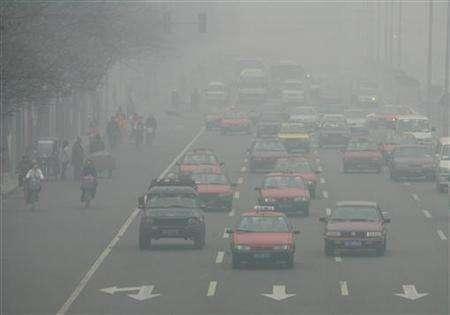
I never wanted to become a lifer in China, however, so I took the GRE right before I left and then applied to graduate schools during the bleak Jinan winter. Sending out applications endowed me with a moment of hope-inspired warmth before I would leave the post office and traipse down the smoggy and bone-chilling streets of Jinan.

I heard back in March that I was accepted to Northwestern’s journalism program among a few others. This was huge news for a wannabe journalist like me because Northwestern is simply THE program for journalism. (Sorry, Missouri. It’s true.)

The problem, though, is that the one-year NU program costs a comical $84,000. What’s more, they offered me only $12,000 in scholarships. Thus, to attend Northwestern, I would have to swallow $72,000 in debt (about $95,000 after interest, according to a financial advisor).

Now, 72K isn’t a big deal in the world of law, or the world of medicine, or business. But journalism? Boy, that’s a gamble. So I shot out emails to a bunch of trusted confidants in the journalism biz, and not a one told me to jump at the opportunity. Instead, they all talked about (a) how a master’s degree could help me be a teacher, and (b) how a master’s wouldn’t guarantee a job in the industry, how it wouldn’t impress anyone.

In that initial post, I surmised:

So there it is – how it’s possible to have the best news of the year turn into the worst news. Congratulations! You, the 24-year-old desperate to be a journalist, have been admitted to the best journalism school in the country (world?)! Now, here’s your piddly financial aid package. Go find $70,000 – psst…it’ll be more like $95,000 when all is said and done – and come on board!


Part of me wonders if I am just being a wuss, if I need to bite the bullet and swallow the debt if this is really what I want to do. Another part of me wonders if that is a decision that could ruin the next 10 years of my life.

Well, Hopfrog gave his opinion: That I was being a wuss. That if I really wanted to be a journalist – and wasn’t just paying lip service to the idea for dramatic effect – then it would be foolish (and wuss) of me not to go to Northwestern. And that’s fair.

In the end, though, I decided not to heed Hopfrog’s advice, and punted on Northwestern. (Actually I deferred my enrollment, so I could, in theory, go there next year. But I will never, ever pay $70,000-plus for a degree that doesn’t guarantee me a job that I want, and there is no journalism degree, not even from Northwestern, that could insure a job.)

Hopfrog makes valid points, but I don’t know that he has enough of a grasp on how bleak the U.S. journalism industry is right now. It’s worse than stagnant.

If I were to go to Northwestern, I would finish up in August of 2011 and be $70,000 in the hole. Even supposing that the U.S. economy begins to right itself (hardly a surefire proposition), the journalism industry will still be turned on its head. Bloggers and fan sites and ESPN will own such a huge chunk of the industry that it just isn’t a good bet to think that a degree from Northwestern will be a ticket to a job. It doesn’t work like that if there are no jobs.

Maybe I could find a job at a smaller paper, in a place like Lawrence, Kan., or Bloomington, Ind. – some college town or something similar. But those gigs pay in the $30,000 range, and if I were coughing up $9,500 a year to pay off loans, then I am basically working a $20,000 per year job. And maybe I could catch on with an online outlet, but the problem with online journalism at the moment – really, the systemic problem with the industry as a whole – is that online journalism isn’t generating any money.

My prediction – and I want to get in print so I can have a good I told you so! to play with in the future – is that Northwestern (and every crazily expensive journalism school) is going to cut its prices DRASTICALLY in the next three years, five years max. My prediction is that the crop of kids going to Northwestern and Columbia and Missouri in 2010 will go down as one of the last ones to get duped into paying anywhere near that much money for the chance to enjoy unemployment in a crumbling industry.

Think about it. Newspapers (and the journalism industry as a whole) really started to fall apart in 2008. The group of kids that would have gone to graduate school for journalism in the fall of 2008 were already signed up by the time papers started sharing copy, by the time long-time writers began to get the axe, by the time that even the most qualified youngsters couldn’t get that first job (me among them). The 2009 crew knew what was happening, but when they were accepted in early ’09, they could have still deluded themselves into thinking that the economy and journalism industry would right itself in the next year or so.

Now this 2010 group, which like me was accepted into these schools in early 2010, will be at the mercy of the new face of journalism: Bloggers who are more on top of stories than anyone (but don’t make dick for money), a shrinking number of outlets that occupy a growing chunk of the market, newspapers and magazine that are paper thin, that are still shedding staff, that appear to accepting that theirs is a fate of less content and fewer writers.

So, that’s why I am not going to go to Northwestern. Charging $84,000 for a one-year program in journalism, even if it comes with the Northwestern brand name, is tantamount to a money grab. Northwestern and other schools could charge that much in years past under the guise that it would land kids a job in the industry. Well, not anymore. The industry that we knew is gone, and so are the jobs that warrant paying that much for a degree.

This is one of the last years that people who are smart enough to get into the program will be foolish enough to not see the writing on the wall.

What I’ll be doing instead of Northwestern is getting a Master’s degree in journalism from a well-reputed Danish university, starting this fall. I received a full tuition scholarship, and I am confident that I can cobble together enough money to pay for the living expenses in Denmark. I have absolutely no disillusions that a master’s degree from Denmark will be some invaluable asset when I graduate and try to get a job in the States. Indeed, employers may scoff at the idea of hiring someone who went to school in Europe. But then again, the chance to attend school in a country like Denmark and not pay a dime for tuition is cool unto itself. Cooler than being saddled with $10,000 of debt each year until I’m 36.

***

Just wanted to agree - White Men can't Jump really is a classic - for a basketball player who only got into the game (from the UK) at 16 in the mid-90s it showed what basketball could be. The other one I'd describe as a classic if “He got game”.


Never got into the stretching thing before the game though... even living in China.

Doug made this comment on a post that used the film (work of art, really) White Men Can’t Jump as a springboard to talk about stretching in China. You see, in White Men Can’t Jump, there is a great scene where the movie’s lone white man, named Billy Hoyle (played by Woody Harrelson), is stretching along the sidelines. He is mocked by the all-black cohort of players, including his future buddy and teammate, Sidney Dean (Wesley Snipes). “What’s this mother f&*% doing? Stretching?”

Unlike Doug, I was never quite as into He Got Game. It does have some awesome scenes. But there are also aspects of it that are shamelessly superfluous, seemingly little more than a way for Spike Lee to make the film 30 to 45 minutes longer than it actually should be. Seriously, why does the dad of Jesus Shuttlesworth need to develop a love affair with a prostitute? Couldn’t he have just gotten a prostitute, and that could be that? That storyline goes nowhere, yet still Lee dedicates a not insignificant chunk of the movie to Papa Shuttlesworth’s courtship of a hooker, in the process forfeiting an incalculable number of chances to show Ray Allen jump shots.

Anyway, I still love the Chinese’s gratuitous stretching, and the fact that I can walk down the street flapping my arms or holding my hands high above my head and not get looked at like I’m some sort of freak. Strike that – in Jinan, anyone with white skin gets looked at like they’re a freak. But at least I’m not getting the raised eyebrow because I’m stretching. Just because I’m a white man (who, by the way, can’t jump).

***

Interesting stats about lefties. Being one myself, I guess I never knew that only ~11% of us are that way. For what it is worth, four of my nine players on our youth basketball team were lefties. Three of them were guards. I think lefties have an advantage, especially in youth hoops because defenders just aren't used to guarding their strong hand.

Jim V left this comment on “No South Paws in the Far East,” a post about how lefthandedness is discouraged in China and, by extension, how there are no lefty ball players.

I totally agree, Jim, that it throws off youngsters when they try to guard lefties. It’s a quirky thing to deal with. What’s also neat about lefty ballers is that they look downright cool when they play basketball, or at least when they shoot. I don’t know if I’ve ever seen a sweeter jump shot than former Missouri star (and therefore sworn nemesis) Kareem Rush, who had this buttery lefty stroke that, if flipped to the right, would probably just look like any old run-of-the-mill J. Other aesthetically pleasing left-handed shooters: 2010 Kansas Jayhawks freshman Xavier Henry; Milwaukee Bucks guard Michael Redd; former NBA guard and pothead Damon Stoudamire. No word on whether or not Jim V’s stroke is pure or not.

***

Michael Jacksson said...

buy viagra

viagra online

generic Viagra

Michael Jacksson left this on what was, in my mind, one of this blog’s better posts, “Up Fake: China’s Booming Fake NBA Market”. The post dealt with the interesting topic of fake, or jiade, goods in China, particularly the fake NBA stuff, which I seem to see every single day. Thanks for reading, Michael.

***

I have been loving your writing and particularly love that you are Suns fan. I caught the Spurs Suns game on Sunday morning where Dragic the Dragon played an amazing 4th quarter (talk about spindly!!) and where Barbosa really showed up. I don't know about Jinan, but here in Beijing I thought the Meng Niu ads with highlights were really cool... I mean the milk graphics and a milk BBall!! WTF?


But I hear you on the commentary.. I have been following to Suns here in China since I moved here from Phoenix in 1995 (yep, i was in Phoenix during Sir Charles and Thunder Dan's days!!) and have had lots of fun picking up Bball vocab to talk NBA with the Beijing taxi drivers.…

Thanks, Tianrui. I appreciate it. I wrote that post before the Suns’ season was ended in sickening fashion by the Lakers. One can’t help but wonder if they would have won that Lakers series had Ron Artest not put in that buzzer-beater in Game 5.

I went nuts when Jason Richardson banked in that ridiculous three-pointer to tie the game. Of course, as luck would have it, Kobe Bryant – the best clutch jump shooter in the game – then proceeded to airball his game-winning attempt by five feet, and Artest squirted in there to get the rebound and put up that awkward, old-man lay-up. Killer way to go out, but then again, it’s a Steve Nash team, so it’s only fitting that there was a dastardly twist. With Nash, a loss is never just a loss.

It’s just incredible to think about the various ways in which Steve Nash has been screwed over in the playoffs: Tim Donaghy fixing games in 2007, Tim Duncan’s hitting his first three-pointer of the season in 2008, Ron Artest playing the role of hero in 2010. I don’t feel too sorry for guys who get paid millions upon millions to play basketball, but if I did, I’d definitely feel for Steve. And now that Amare Stoudamire has opted out of his contract, and now that Jason Richardson and Grant Hill and Steve Nash are all a year older, it really is a shame he won’t win a title.

***

The slang in Beijing is mostly the same, 我靠 tends to be what I hear most often in terms of beifanghua.

Jim wrote this on a post dedicated to the different slang terms that I hear on the basketball court here in China. Even when I return to the States, I have every intention of shouting Mea you!!! when someone takes a stupid shot. The term – which is prevalent on courts in China – means “don’t have,” and is pronounced more or less like mayo. People will think I’m talking about condiments. I give it a two percent change of catching on and becoming a nationwide phenomenon.

***

Have you thought about foregoing this blog and pitching this idea to a book publishing company?

Jim V wrote this on an early post when I laid out what this blog was about. To be honest, yes, I have thought about trying to write a book about basketball in China. But my apathy toward learning this bizarre language will probably prevent such a thing from ever happening. Since you brought it up, though, I’m convinced that I should write a book about something, if not playing basketball in China. A book would be a way for me to write non-fiction and at the same time skirt the journalism industry, which, of course, doesn’t seem to have any interest in ever welcoming me aboard. I can mark you down for a copy, right?

***

Hi,

Being a Bball nut also, I thoroughly enjoyed your post on the Chinese BBall experience.


I guess Bball skills brings out the “macho man” in most of us and keeping score and dominating is affirmation of manhood.


Maybe, the average Chinese Bballer is less “confrontational” or competitive in some of these situations since they know each other well ( and each others families ? ).


I know that when I played ping pong ( table tennis ) with skilled players , they didn’t try and beat me to death and make me cry. :)


They were gracious and give up a few points here and there.

Thanks, LA Guy

LA Guy has an interesting theory, which he discusses on an early post in which I express my bafflement at how Chinese players often don’t keep score. In the States, I’ve rarely played in games where people don’t keep score. There are any number of way in which score is kept. In HORSE we use letters; in five-on-five it’s generally the case that threes count as twos, and twos as ones; in “21” everyone seems to have their own nuanced scoring system. My experience in the States was that unless you’re playing by yourself, basketball is a competitive endeavor. Not so here.

***

I was in Orlando when we first got T Mac and he was going to be the guy that got us over the top. Of course, we heard that when we got Penny, and when we got Shaq, and what we really got was swept by the Rockets.

It was clear early on that T Mac wasn’t going to win any championships. For pretty much the same reasons that I don’t see Orlando doing squat with Vince Carter.


My immediate guess for his popularity was for being a Rocket and your entry confirmed it. At least Shane Battier gives 100% and has become a defensive monster, he deserves to be popular somewhere. I’ll take a team player like that over the T Macs anyday….

Hopfrog left this comment on this post – one of my favorites – which discussed the popularity of Tracy McGrady and then looked at why T-Mac is still popular here ever though he can hardly play anymore. The Cliff Notes on his popularity: Yao Ming and adidas.

That’s it for now. Thanks as always to everyone who reads this and comments. I appreciate it. Until next time…

June 26, 2010

A Sick Move, II

There is, however, one big drawback to Li Ball’s court: It’s dirty as hell. This uncleanliness is hardly unique to Li’s court.; maybe it’s just more noticeable because there are few other defects. Today one of the regulars has taken a big broom – essentially a long wooden stick with a bunch of wispy bits of straw on the end – and is doing a windshield-wiper motion along the baseline. In the process, he is sending plumes of dust into the air that force people to scatter out of the way. I don’t how much of an impact this has: Even with the housekeeping, whenever anyone takes a dribble, dust is displaced like water that has been struck with a rock.

Now, basketball is hardly a sanitary activity. Really, anytime a bunch of guys are clamoring to handle something (cards, video game controllers, etc.), it pretty much can’t be clean. I get that. But when you look at your hands after playing a few minutes of basketball in China…wow. It’s disgusting.

And while it could well be true that dirt isn’t all that dirty, it’s not just dirt that makes China dirty. Which brings us to a larger point about China in general. Like Li’s court, it’s dirty as hell. The polluted air is what you hear about when people talk of how dirty China is, and that’s not an exaggeration. But now that I’ve been here for 10 months, the smog’s not even what bothers me anymore. It’s the dirtiness, the germiness.

I came to China a little on the OCD side about germs. But instead of curing me of my germ aversion, China has merely made me more sensitive to it. And there are any number of things that Chinese people do that are downright gross. (Having now reread this post, I don’t know if there is any way for me to make this not sound discriminatory: the Chinese do a lot of gross stuff. But at the same time, I don’t know if there is any way to dispute the claim that, by the American standards I grew up with, it’s not true. That’s not to say the Chinese are stupid or mean or savage or lesser. I’m just saying that they have some tendencies that would never fly in America – just like Americans have tendencies that wouldn’t fly in China. I know that I am speaking from an American viewpoint, not a privileged viewpoint. Heck, maybe America is just too sensitive to cleanliness. This article and this article seem to hint at just that.)

You can’t walk one block on any remotely-populated street and not hear someone make a deep, guttural hacking sound – a telltale prelude to a huge loogy. Just yesterday I got off a train (I spent the last 10 days in Chengdu, hence the dearth of recent posts), and at the exit gate I looked down to see a pair of stringy, yellow-green clusters of stuff that used to reside in the area between someone’s mouth and lungs. To be fair, at least this person cleared their throat after they got off the train, which is more than can be said for innumerable people who added that putrid, hacking noise to the soundtrack of the 30-hour train ride. And in a land of 300,000,000 smokers, I can assure this is a never ending soundtrack. The staircases at my school, where parents conglomerate to wait for their children, are another hotbed for spitting. Really, all of China is a hotbed for spitting.

Then there is also the move where people blow their noses, but without a handkerchief or Kleenex. They just send the contents of their nose jutting toward the ground. When I was a kid we called this the “Texas Air Hanky.” The last time you saw it was either during a hockey game or on the streets of China.

It is also not uncommon to see little (or big) piles of vomit resting at the base of a tree. If you have to puke then you have to puke; I get that. But I’ve seen more ground vomit in my eight months in China than I did in my 24 years in America. And I’ve been to a lot of bars in America.

People are also apt to relieve themselves on sidewalks. “People” in this case could mean everyone from itty-bitty toddlers (who wear crotch-less pants for quick and painless popping-and-squatting) to old men (who know better but just don’t care). Quick story about public relief of the excretory system: my mom, dad and I came to visit my brother in China a few years back, and on a plane from Xian to Guilin, my dad was the odd man out on a seat, stuck sitting on the other side of the aisle from my brother, mom and I, who controlled our own three-seat section of the plane. Pa was wedged next to a little kid who was wearing the bottomless pants. (If you’re having trouble imagining what this looks like, just think if you cut a big oval-shaped hole in your jeans from the top of your zipper, through the legs, back around to the midway point of the seat. Or you could just >look here.) Well, this kid – seated about five-and-a-half inches from my dad – unloads his bowels then and there, right after takeoff. It gets on the mom a little bit, and while it didn’t actually touch pa, he nonetheless got an eyeful of doodoo. It was a cultural experience he could never have had in a land where parents, you know, make their kids wear diapers.

This may all seem like superficial stuff. OK, so there is spit on the ground. So there is a little puke tucked against the base of the occasional tree. So kids relieve themselves everywhere, but who has ever been successful telling a 14-month-old when and where to go? (Anyway, is having a bunch of soiled diapers that much cleaner than the occasional puddle?)

The thing is, it’s not all superficial. The eyesores are accompanied by a host of things are more than just eyesores. It really is dirty – and not just dirt dirty. It’s really dirty.

There are, for instance, no soap dispensers in public restrooms, save nice restaurants. (Beijing and Shanghai pay a little more heed to soap, but like I’ve said, Jinan ain’t no Shanghai.) The bathrooms at our school feature puddles of piss, and soap dispensers with soap that’s so watered-down it surely houses more germs than it prevents.

And it isn’t just our crummy school. It’s the country at large. There wasn’t a drop of soap on the train I got off yesterday. The people who handle the food you buy off the street don’t wear gloves on their hands – just a discernable layer of brownish crud that can’t possibly be clean. And those Texas Air Hankies don’t just happen on the street. The last time I went to McDonald’s someone was pulling the time-trusted maneuver in the sink in the dining area.

Like so many of the things I talk about on this blog, the germiness of China is hard to quantify (heck, germiness isn’t even a real word). How the Chinese are always drinking hot water, how much the Chinese like to stretch, how much counterfeit clothing there is: these things are all observable, but not necessarily measurable.

The same goes for the sanitation conditions. I haven’t the scientific prowess to conduct a study of the actual germiness of China – just the time and inclination to write about it and to make up words to describe it.

But even if I can’t convey in any sort of statistical way just how germy it is in China, I can rehash an event that beats home the sanitation issue.

After a 24-hour trip that started in Kansas City, I landed in Beijing in early September. If you recall, early September was at the height of the H1N1 craze – that is, the Pig Flu craze – and people were all in a tizzy about it. Especially in China. This article, for instance, entitled “China faces grim situation as H1N1 escalates,” was published the very day I landed in China. The country took to quarantining people – like this guy, a professor from the University of Michigan, and this guy, the mayor of a major U.S. city. If you rode on a plane with someone who turned out to be sick, you could be quarantined. If you coughed a little bit too much, you could be quarantined. If you looked extra fatigued, you could be quarantined.

As another precaution, there was a rapid spread of what looked like little plastic handguns that, when stuck up to someone’s forehead, gave a quick temperature scan. One of these guns/thermometers was pressed against my forehead as I exited the plane in Beijing. I was a little bit nervous, because anything from the mildest of temperature abnormalities to a slight technical malfunction could have landed me in a Chinese quarantine, something I’d rather not see first-hand.

By the grace of God, I waltzed through the sickness-detection chamber A-OK. (I was, after all, in fine health.) But after the lengthy flight and comp coffee, I needed to hit a bathroom when I got on the ground, so I headed for the nearest bathroom. It was just like an American airport bathroom – a cavernous room with urinal upon urinal against a teal-green wall. I relieved myself and, when I was heading out, beelined toward the sink to rinse up. The American equivalent to this WC would have had a bounty of soap and a hand sanitizer dispenser as well, just in case you’re too lazy to actually wash. (Even the Kansas City airport has hand sanitizer dispensers, so it can’t be that far-out of an addition. Like I said, I’ve always been a bit of a germophobe, so I notice these things.)

Alas, there was no soap in the bathroom. So one moment I was getting my temperature taken, an obligatory procedure that could well have landed me in a quarantine because Chinese officials are paranoid (justified or not) about the spread of H1N1. The next moment, I am taking a leak in a bathroom that doesn’t have any soap.

Li Ball’s court doesn’t have any soap either.

June 7, 2010

This Might Be a Stretch, But...

As the warm water begins to replenish my body – much more quickly and efficiently than cold water ever could – I am reminded of a scene from the 1992 classic “White Men Can’t Jump.” Calling it a classic may seem foolish to some, but to basketball fans, especially basketball fans who, like I, saw that movie at an impressionable young age, it’s not a stretch.

The movie boasts some quality basketball scenes, plus it’s freaking funny. To boot, “White Men Can’t Jump” also deftly deals with the black-white divide in basketball, a phenomenon that’s painfully obvious but nary discussed. Whites can dig the movie because the main white character, Billy Hoyle, ultimately has his day in the basketball sun. And blacks, in part, may be drawn to it because the movie’s main black character, Sidney Dean, poignantly unleashes all of the white stereotypes. Plus he can ball.

Hoyle (and whites in general) is portrayed as naïve and, per skin color, out of place playing basketball. Plus his name is Billy Hoyle, which is such a perfect name for a white guy playing inner-city basketball (at least on par in the annals of all-time fictional hoops names with Jimmy Chitwood). Billy Hoyle must have either struck the writers in a split second, or was concocted only after hours and hours of deliberation. That is, Billy Hoyle is the product of either instantaneous genius or painstaking contemplation. It’s too good to be anything else.

Meanwhile, Dean (and blacks in general) is portrayed as needlessly flashy on the basketball court and something of a prick in real life. (“It’s hard work being this good!”…“I don’t mean to brag, but I’m the greatest!”…“Billy, you either smoke, or you get smoked. And you got smoked.”)

Hoyle articulates a sentiment that has crossed many a white minds when he delivers one of the movie’s more memorable quotes – memorable for its bluntness and resonance with basketball players, if not its poetic properties: “A black man would rather look good and lose than look bad and win.”

The goofy title, goofier clothes and unbroken stream of profanity may, to the lay basketball fan, give the movie a flippant feel, like it’s just some cuss-filled comedy starring Wesley Snipes and Woody Harrelson, who between them have been in such hard-hitters as Kingpin and Passenger 57.* But White Men Can’t Jump is more than your run of the mill laugher. In fact, nearly 20 years later and thousands of miles away, here in early June, 2010, on the courts of Jinan, China, “White Men Can’t Jump” still has relevance.

* In fact, Snipes’ movie portfolio has devolved big-time last few years. He was in seven straight films from 2005 to 2008 that were straight-to-video. I guess you take the money where you can get it after you get hit with tax fraud charges and are forced to cut multi-million-dollar checks to the federal government.

Let me reset a scene from the movie. Billy stunned Sidney when the two played for money, and soon thereafter Sidney decides that they should team up for a little hustle. Sidney makes his way to a local court, where Billy is going to meet him, so the duo can dupe some people for money. They don’t have an elaborate scheme for how to work their hustle. Instead, they’re simply going to take advantage of the one thing Billy has that no one else does: white skin. After he has talked a sufficient amount of trash and ruffled a sufficient number of feathers, Sidney declares, “Five-hundred dollars! And you can pick anybody out here. Anybody!” His opponents are enticed. They can choose Sidney’s partner. It’s like they are the captains, but instead of picking the best players, they will simply pick, based on looks, the worst one they can spot.

The target of Sidney’s hustle, a guy named Raymond, scours the on-lookers, trying to find the person who looks least likely to pose a threat in a game that will result in someone pocketing $500. Raymond’s buddy then says, “Hey Raymond, look at the chump, man,” and points at Billy Hoyle, who mosied onto the sidelines while Sidney was busy laying the seeds of this game. “Give him the chump!”

Now, why is Billy such a chump? Well, there is of course the fact that he’s white and has entered an all-black court. There’s that. But there is also the fact that he’s stretching. And despite the physical rigors of basketball – and the coinciding usefulness of a good pre-game stretch – stretching in basketball, in America, isn’t as common as one may think. It is, however, exceedingly common in China, which is why I’m thinking about “White Men Can’t Jump.” (By the way, I am white and can’t jump.)

I have always been a big stretcher. I have back problems, which, along with my current addiction to massages, has prompted me to engage in some serious stretching. There is one stretch in particular, designed for the groin muscle, that is incredibly useful but totally awkward. I stumbled upon it when I was shelving videos at my library job and ended up taking home how-to DVD on yoga. (I worked at a library? Better believe it. Just part of the post-college employment fiasco that has landed me in China in the first place.)

To pull off this stretch, you plant one foot out in front of your body – say, your left foot – with toes facing forward. You bend that knee, and then plant your opposite foot, the right foot, behind you, parallel to the other foot but with the toes perpendicular to the first set of podiatric digits. So, at this point your left foot is in front of you, toes forward, and your right foot is behind you, toes running east-west, so to speak. Your body and face are of course facing the same direction as your back set of toes.

Next, you plant the coinciding hand of your front foot – in this case, the left hand – inside of the front foot, lean forward, and place that elbow against the inside front knee. You then torque your body with that front elbow, trying to swivel your hips around as much as you can. The resulting pull on one’s groin muscle – the groin of the front leg – is incredible. For added leverage, it helps to do the stretch close to a wall. Then, as you torque your body with the elbow of that planted hand, you can grasp at the wall with your other hand and yank a little bit more. It’s a killer stretch. (Describing it, however, may be beyond my literary acumen, so please don’t hurt yourself.)

As good as this stretch may be, though, it’s hopelessly awkward. Think about it. Your legs are stretched wide, and your feet are facing opposite directions. You are twisting your body with whatever force you can muster from your elbow, which is buried on the inside of your leg. And if, like me, you are looking for a little extra
oomph, you are grasping at the nearest wall to corkscrew yourself even further. I used to do this stretch at the 96.5-percent-black gym I played at in the months after college, and I’d get more than a few stares. Just like people were starting at Billy Hoyle. Come to thin of it, this stretch may have been one reason that one particular player at my old gym took to calling me Billy Hoyle. I think he meant it is as an insult, but I of course took it as a compliment.

(It’s been my experience that stretching is a little more common among whites – and not just Billy Hoyle. My intramural basketball team used to get our stretch on before every game, even indulging one another in some partner stretches. Our favorite was one where two people sit down with their legs stretched in front of them, toes pointing toward the sky. You then press your feet against one another’s, and reach out and grab the other guy’s hands. One person then yanks the other forward – wait, maybe yank isn’t the best word to use when describing this…how about pulls. That’s a little better. Anyway, one person pulls the other, and then the visa-versa. I’ve never seen anyone doing this besides my old IM team, but the point is that whites, in my estimation, are a little less abashed about stretching than blacks.)

But whites are nothing compared to the Chinese, for the Chinese possess a zest for stretching that I had never seen before. This is, after all, a country that is known for massages, and it’s the nation which spawned Tai Chi, so the harmony and sanctity of one’s skeletal structure is treated with more reverence here – at least historically – than in pretty much any country in the world. (That is to say nothing of how they treat their lungs.)

You can see this affinity for stretching everywhere. Often times people will wave and flap their arms while they walk down the street, treating the sidewalk like a hitter may treat an on-deck circle. It’s also common to see Chinese people plop a foot upon a railing or wall and use it as a sort of stretching device. And then there are the ubiquitous exercise stations that line sidewalks all over this city and others throughout China.

Not surprinisngly, this stretching frenzy manifests on basketball courts, which serve as yet another venue in which the Chinese get their stretch on. On this day, there are any number of stretches going on at Shandong Normal U. There is the old standard where you stand with your legs spreads wide and lean forward to touch the ground. There are the arm flaps that are so wildly popular here. And there is one that my friend from America, who had chronic knee problems, used to do where you place your fingertips on your kneecap and gently move it around, almost swirling it, like your ACL is a rubber band that you’re are trying to give a few extra centimeters of elasticity.

As is the case with the warm water, I have wholeheartedly embraced this facet of Chinese culture. Like I said earlier, I have back problems, and I have for years been doing the types of quick, quirky stretches that people do here – the exaggerated shoulder shrugs, touching my toes, lunging and twisting and rubbing. I don’t know if this means I have a kindled spirit here, but maybe some kindled skeletons.

ALSO: I appreciate comments on this blog, but one of the many annoyances of publishing a blog from China is that I am apparently unable to leave comments. I do not know what is up with that; I do not know, for instance, why I can (sometimes) sign in and publish a post but cannot leave a comment. I have tried multiple proxies, and none allow me to comment. I do not want to seem like an ingrate by not responding, or like I do not care, or have not noticed; I am not, I do, and I have. I just have not yet figured out how to leave comments. I am glad that you have, though, so please continue to!

May 26, 2010

No South Paws in the Far East

There are any number of things that induce giggle-fits from the young’uns I teach. For instance, they invariably get a kick out of it when I stroll into class with coffee, which is a relatively recent addition to China’s beverage market (but a long-standing staple of my diet). And there is a virtual riot whenever we play a game and one of the teams’ point totals lands on 250, or “er bai wu.” In China, er bai wu is akin to an insult, derived (apparently) from ancient China when strings of currency were always lumped 500 at a time. Therefore, if you are er bai wu, you are essentially half a person. It’d be like calling someone an idiot.

Another teacher, who happens to be left-handed, told me that her left-handedness is nothing less than a point of amazement in her classrooms. When she wrote her name on the board on the first day of the term, the kids in each of her classes flipped. At first she didn’t understand what was so funny. Was it her handwriting? Was there something stuck to the back of her pants? But when she asked, she was told that it was simply the fact that she’s left-handed. Because in China, there aren’t lefties.

Well, that’s only partially true. Genetically speaking, there are indeed lefties. Roughly 11 percent of human beings are left-handed, whether they’re born in China or America or Cambodia or wherever. Thus, there are roughly 130 million people here who are technically left-handed. But if a child has a physical preference toward being left-handed, then they are trained from a young age to spurn that tendency and use their right hand, which, in China, is the right hand to use.

The blogger Ben Ross rehashed a conversation that he had with a Chinese-born gentleman who had moved to America.

…When the conversation turned to culture shock, I asked him what he thought was the strangest thing he saw when he first came to the US.

“Left handed people,” he replied without any hesitation.

“You don’t have left-handed people in China?” I inquired, making sure I hadn’t mistranslated his words.

“Nope, I had never seen anybody write with their left hand until I came to the US” he said.

“How is that possible?” I asked, “Isn’t that genetic?”

“Maybe so, but in China kids are all taught to write with their right hands. If they pick up a pencil with their left hand, the teacher will put it in their right. It’s really just a matter of practicality. In the US, you have left-handed desks, left-handed guitars, and all sorts of other left-handed devices, but in China we have none of the sort. It works out better that way I think, no need to manufacture two different kinds of something when only one is necessary.”


His story is corroborated by Wikipedia:

In ancient China, the left has been the “bad” side. The adjective "left" (Chinese character: , Mandarin: zuǒ) means “improper” or “out of accord”. For instance, the phrase “left path” (左道, Mandarin: zuǒdao) stands for illegal or immoral means. The character for “left”, depicts a left hand attending to work. In contrast, the character for “right”, (Mandarin: yòu) depicts a right hand in relation to the mouth, suggesting the act of eating.

One more anecdote, from the China Economics Blog:

One game that some colleagues and I play when undertaking 3 hour exam invigilations in the UK is to count the number of left handed students. When there are 100 students you usually end up with around 10%. This has been fairly consistent over the years.

Imagine my surprise therefore to hear that there are no left handed people in China.

Of course, there is nary a better manifestation of one’s preferred hand than the jump shot. After all, the jump shot – or at least the act of shooting, be it a free throw or set shot – is basketball’s intrinsic act. There is nothing like it in any other sport, and you can only do it with your strong hand. There are a lot of things in sports that you can do with either hand. In football, you can (and should) tote the ball with both hands, and on defense, tackling is a full-body endeavor. In baseball, many players can switch hit. And save moments when players wind up for slap shots, I can’t tell what’s going in hockey. Sure, you can do things with both hands in basketball, like dribbling and passing. But you can’t shoot a jumper with both hands. 

Like most of the Chinese, I play with my right hand. Unlike the Chinese, I sport Zack Greinke T-shirt jerseys and Florida State basketball shorts.

I’m thinking about handedness while I watch Game 4 of the Western Conference semis between the Lakers and Suns. Of the 10 starters, there is one lefty, Lakers point guard Derek Fisher, who has a ceiling-scraping jump shot that flies so high out of his left hand that it seems there is no way it could possibly find the net. (All too often, it does.) Thus, the starting lineups are reflective of the general population – exactly 10 percent are left-handed.

The percentage is exceeded, however, when the backups spell the starters. Off the Lakers bench comes Lamar Odom, a lefty, and the Suns send left-handed Yugoslavian Goran Dragic in for Steve Nash. All told, 19 players play in Game 4, and three of them – or about 16 percent – are left-handed. 

Nineteen is a pretty small sample size, though, so let’s look at the Eastern Conference Finals as well. In Game 4 of the dud series between Orlando and Boston, not one of the 20 players who took the court was left-handed – or, none of them played left-handed. One of them, though, Dwight Howard, was actually born left-handed. From his Web site:

A lot of people don’t know it, but when I was growing up I was totally left-handed. I wrote left-handed, held a fork left-handed and shot the ball left-handed.

But when I was in the eighth grade I tried to dunk on a guy and he undercut me and I landed on my left hand and broke my left wrist. After that, I taught myself to write with my right hand, eat right-handed and shoot the basketball with my right hand.

(Unfortunately for Orlando, he never figured out how to shoot a free throw with his right hand; he’s a 59.9 percent career free throw shooter. He missed five free throws in each of the first two games of the Boston series, and the Magic lost by three in each game.)

If you include Howard as a lefty, then four of the 39 players who played in each series’ respective Game 4s were left-handed. That’s 10.25 percent, or almost exactly the same percentage as the general population. I reckon that this percentage holds up on courts all over America. I can’t say for sure because I was never scrapping for things to blog about in America (and therefore never studying which hand people were using to loft shots at the goal). But I think one out of 10 seems about right. I know my intramural team in college had one lefty. I know that the gym I used to frequent in Kansas City boasted the occasional lefty, and I know that the Kansas Jayhawks had one lefty last season (Xavier Henry). I never kept tabs on this back in States, but I would say that, as is the case in the NBA playoffs, about 10 percent of U.S. ballers I played with were left-handed. 

This kid in Beijing shot right-handed, even if he shot on monkey bars and not a basket.

I want to keep tabs this afternoon, however, so I set out for a little anthropological study. I dart over to Shandong Normal at about 4:30, fighting rush hour traffic on my crummy little motor bike all the while. It takes little more than a single taxi ride in China to realize that drivers here are crazy, at least crazy in sense that they operate with inches the way drivers in the States operate with feet. If you planted an American driver behind the wheel in a Chinese city (myself included), they’d get in a wreck within minutes. Conversely, if you put a Chinese driver in American suburb, they might go crazy because there isn’t enough traffic. I knew that traffic here was bonkers the moment I left the Beijing airport. But until I got my motor bike, I didn’t realize exactly how crazy it was; now it is up-close. And because my bike doesn’t really have breaks – I keep an old pair of shoes in the basket and an angel on my shoulder – it’s all the more precarious. If this blog ever suddenly ceases, Chinese traffic may be the culprit.

The girls play right-handed, too.

Anyway, I make it to Shandong Normal easily enough. There is a huge gaggle of people watching a women’s basketball game being held on one of the courts nearest the front gate. I have never seen women play full-court games in China, let alone witnessed an all-girl duel with spectators lining the sidelines making all sorts of noise, so this is unusual. (There will likely be a post devoted to women’s basketball at a future date…) But I’m not worried about the sex of the players, just the hand they’re using to shoot. And which one was it? Right, right, right. There are a few of them who are savvy with their left-handed dribble, but no one is shooting left-handed.

I then move on to the other courts, occupied by guys, to take in some half-court four-on-four games. I mosey around for about 25 minutes – not trying to get into a game, not seeking out English speakers, just watching for those hands. Over the course of my nearly half-hour of watching jump shots, I see one guy shoot left-handed. One. I don’t know exactly many people I saw shoot, but I know that, between the ladies and the guys, I saw at least 50 or 60 people heave shots, and one was left-handed. Definitely not 10 or 11 percent. 

The one lefty!
After I do my highly unscientific research at Shandong Normal, I ride back home to play with a friend who recently got back from a jaunt to Qingdao. We walk to the courts that we share with our annoying co-habitants from the boarding school, passing a pair of four-on-four games. (There are no lefties.)

Within moments, a hoard of kids comes over and asks us to play. We begrudgingly comply, and proceed to play our own four-on-four games. This adds eight more people to the sample size, and no one is left-handed. That makes it close to 60 or 70 different people who I have seen launch shots today, and only one is left-handed. There must be more left-handed people than this one guy.

I’ll keep an eye out for more lefties in the future, but the early returns are that there aren’t a lot of lefties. But hey, that’s all right.

May 8, 2010

First-Team All-Swindle, II

When Jonathan asks about particular players, Goel nods knowingly and – in a feat that many US basketball fans couldn’t achieve – proceeds to list their numbers.

I write for a few hours and then watch basketball to round out the morning. There is a 9:30 a.m. tip between the Spurs and Mavericks, but before the game starts there are highlights reels galore – the Top 10 Blocks of the Year, the Top 10 Buzzer Beaters of the Year, etc. Then there is a Jason Kidd commercial in which he’s advertising his Peak brand shoes. Kidd is one of the handful of U.S. players – along with Shane Battier and Ron Artest, to name a few – to have been signed to deal with Peak. The commercial is hokey – there are tight shots of Kidd trying to get around his defender while he says something in English about how, on the court, “You are your own worst enemy.” Then, after he makes a move around the defender, the opponent is revealed to be…Jason Kidd! Artsy, huh?

Other NBA-on-TV notes:

• There was no game yesterday* because there was an all-day commemoration of the earthquake victims last week.

* This was originally written on April 21.

• During the Mavericks-Spurs game, Dirk Nowitzki receives a curious technical foul. I never figure out why he was T’ed up because, alas, the announcers are speaking Chinese.

• At one point Caron Butler is shooting two free throws during a Mavericks run. After he cans the first shot, he turns to the home crowd and waves his arms to rile them. I’ve never seen anything like it: someone about to shoot a free throw who is nonetheless imploring the crowd to make noise. They oblige; Butler hits the free throw.

• The Spurs really annoy me.

After a few hours of watching the NBA playoffs, it’s off to SNU, where hopefully I can allay my heart-pounding anxiety over graduate school, jobs and my life in general. I immediately start talking to a Chinese guy who I meet on the sidelines named Goel. He is wiry, probably about 20 years-old, and wearing a button-down flannel shirt and jeans. He ends up playing with my buddy Jonathan and I, and after we lose a game, Jonathan takes to asking Goel some questions.

Jonathan was born in Boston – and likes to let people know that he was born in Boston – and with the NBA Playoffs now underway, he has been particularly enamored with his Celtics. So Jonathan sets out to test (a) Goel’s English, (b) his NBA knowledge, and (c) whether or not he likes the Celtics.

Well, Goel doesn’t only speak English, and doesn’t only know about the NBA, but also likes the Celtics. When Jonathan asks about particular players, Goel nods knowingly and – in a feat that many US basketball fans couldn’t achieve – proceeds to list their numbers.

Rondo? “Yes. Very good. Number nine.” Allen? “Ah...Twenty.” Garnett? “Yes. Number five. He was the best until he injured. His knee is...freak.” Seeing as Goel was at a university and playing basketball, it’s no stunner that he knows a bit of English and knows a bit of basketball. But to list off players’ numbers? That’s above and beyond. Thing is, he wasn’t done waxing eloquent about the NBA.

Once Jonathan finishes his masturbatory line of questioning about the Celtics, I ask Goel about my favorite player, Steve Nash, who plays for the Phoenix Suns. Nash’s list of endearing qualities abound. First off, he’s a joy to watch. Watching him is like those days in high school when teachers would flip on a movie: a true reprieve from the sometimes overwhelming monotony of the NBA. He is the point guard of the highest-scoring team in the NBA, and as such it’s his responsibility to orchestrate and moderate a breakneck pace the entire game. He does this as well as anyone ever has, and in 2010, at age 36, became the became the oldest player in history to lead the league in assists. In addition, he is a 6-2 point guard who happens to have the efficiency of a power forward – this season, for instance, he shot 50.7 percent from the field. That was better than any guard in the league save Rajon Rondo (Number nine!), who shot 50.8 percent...but took less than one-third as many three-pointers as Nash...and scored three points less per game.

What’s more, Nash just doesn’t look the part of a big-time basketball player. And I’ve stepped into enough all-black gyms – and been immediately written off because of my appearance – to have a special appreciation for someone who thrives in the face of stereotypes. I even spent the summer of 2005 being called “Steve Nash” at a local gym because, like Nash, I had long, shaggy hair, and because, like Nash, I was one of the rare white dudes playing.

The Suns were being broadcast on Chinese television one morning last month, and, because Nash was on, I made my girlfriend watch for a little while. “Him?” she asked almost incredulously. “He is your favorite player?! He’s so...spindly.” That’s not the word I would have used, but it’s an apt one nonetheless. Nash is indeed spindly, which, in my mind, makes him that much more likeable. The point guard position is getting more and more freakish – guys like Derrick Rose (who is a hoss) and Deron Williams (who is built like a running back) and John Wall (who one pundit described as having “extraterrestrial athleticism”). Point guards are getting bigger and stronger and, more than anything, younger. Yet here’s little old Steve Nash – literally, he’s little and old – still producing outlandish numbers and eye-pleasing basketball. (One more Nash tidbit: During the 2003 All-Star weekend – a couple months after the US had invaded Iraq – Nash addressed the media wearing a shirt that said, “Shoot baskets, not people.” Love it.)

Turns out Goel is impressed with Nash, too. “Nash is amazing,” he says. “He is – how many years? He is 32 years-old? And he is still incredible.” Nash is actually 36, but who’s keeping track. “A player who is very old and is still good like Nash is amazing.” Touché, Goel. Touché.

Goel rounds out his impressive interview with Jonathan and myself when he nails the final question: Who is the best? A lot of people in China will say Kobe Bryant. An increasing amount will say LeBron James. And there is still a segment of the population that will say Tracy McGrady (more on that here). But Goel displays an appreciation for history – and an understanding of the game – when he answers.

Who is the best player? Jonathan asks. To which Goel – like it was a moronic question – blurts out, “Jordan! Of course Jordan!”

***

Goel, Jonathan and I are joined by another foreign teacher named John (who was introduced here). John has a husky build and, it turns out, a bit of a mean streak on the court. Jonathan and I had spent the previous hour building a repoire with the Chinese players in attendance, but that guan xi is washed away in John’s first game. He plays with an intensity that is foreign to these courts, at least this court on this day. He uses his elbows to get rebounds. He refuses to accept other players’ foul calls. At one point, while being guarded tightly by someone on the other team, he thrusts the ball into the guy to clear space – shoving him, basically, with the ball. Yeah, John was getting fouled, but such an unabashed display is still uncommon. The thought that he was in the wrong never crosses John’s mind.

I’ve played in games here at Shandong Normal University where John would have fit right in. A lot of dudes here do seem to relish getting after it and playing with a fire (Cliché Alert! Cliché Alert!). Those games, though, are usually closer to the entrance, closer to Court No. 1. That seems to be the epicenter of competition, and the further you get from No. 1, the more laid back it gets, like the concentric rings of a dart board where the bull’s-eye is Court No. 1.

Right now, we’re about four courts away; the competitive residue doesn’t stretch to these parts. And while Jonathan and I are both competitive, we have the wherewithal to see that today, here, things are amicable and not intense. We were keeping score, but we were also laughing. There were fouls being committed, but they were also being called and acknowledged. There were people chasing down rebounds, but very few of them came with elbows attached – until John arrived. Jonathan and I cringe at the way John is playing and hope that he realizes we aren’t playing our district rival on a Friday night. He never does.

Even with John’s, uh, zest, our team’s winning streak ends at two. Thus, Jonathan, John, Goel and myself walk over to the sidelines. My eyes are trained on the pile of bags, clothes and water bottles sitting at the base of the hoop. My backpack sits there, next to Jonathan’s, a water bottle resting invitingly atop each bag. We guzzle down some water and give that deep, quenched, post-drink exhale. Goel, though, can’t find his water – or his bag. He looks around like someone who is late for work and can’t find his keys. He peels back shirts and backpacks. He looks all along the sideline, and then looks again in all the spots he just looked. Nothing.

“What’s wrong?” Jonathan asks.

“My bag. It is not here.” What’s in it? “My money, my ID card, and my phone.”

He continues to look and John asks if he wants to call his phone. (Don’t think John’s a bad guy. Just competitive.) Goel gratefully says yes and calls his phone. The thief answers, and we listen to Goel speak in Chinese, trying to decipher what is going on by reading Goel’s face.

He hangs up and says that the guy who answered wants 200 yuan. Goel is to meet him later, with 200 bucks, and then he will get his things back. We extend our honest condolences – really, if could have been our stuff that got jacked – but Goel doesn’t seem too upset about it. He’s taking it in stride.

Goel says that he will need to call the guy back in a few minutes and asks if it’s OK if he uses John’s phone. John doesn’t hesitate – of course he could use it. Goel makes another call and I sit down next to Jonathan, on his left, while Goel paces back and forth a few feet away. Quietly, I say to Jonathan, “Feels like a swindle.”

“What do you mean?”

“Just seems a little weird, doesn’t it? His bag is gone but he doesn’t seem to care. Now he needs to pay a guy 200 bucks, but he doesn’t have his wallet. I give it five minutes until he asks us for 200 yuan.” I can’t tell whether or not Jonathan agrees with my cynical conspiracy theory. But he at least thinks it’s interesting. “I never thought about that,” he says, shaking his head and smirking just slightly.

My suspicions pique when Goel says to John, “Can I take your phone?” John is more than compliant. “Thanks! I’ll be back in five minutes.” Goel then jogs out of the entrance, past Court No. 1. Upon exiting the gate, his jog turns to a sprint. I think – but don’t say – There goes your phone, John.

First-Team All-Swindle, III

“You got tea-scammed?” she asked excitedly, as though it were part of the experience of going to Shanghai. And then it hit meI was scammed.

My cynicism regarding Chinese swindles isn’t natural. It has been learned – the hard way. The first time I was swindled in China was in 2007, when my brother and I went to Urumuqi, the capital of Xinjiang Province. On the bus from the airport to our hotel, we were befriended by a guy who spoke pretty good English. We chatted for a while and, when we were about 15 minutes from the hotel, he tossed us a sales pitch about his tour group, Turpan Happy Tours. We could pay 400 yuan for an all-inclusive package that included trips to a series of things that my brother and I wanted to see anyway. We would ride camels and go to a grape farm and peer into ancient caves and do other things unique to the Urumuqi area; this guy’s taxi-driver friend would provide the transport. Sounded good.

The dude came to the hotel with us. Inside the hotel was a huge poster featuring package-deals that included many of the same sights that this guy was offering. The major difference was that those tours were considerably more expensive. Thus, we agreed to terms: four-hundred yuan; sites A, B, C, D and E; his friend would drive; 8 a.m. tomorrow morning.

Come 8 a.m., his friend rolled up in a nice taxi – even had leather seats. We would first go to the furthest destination, where camels and caves awaited. Well, instead of getting on a camel straight-away, which is what we were anticipating, we were first asked to pay. “No,” my brother said in his broken but serviceable Chinese. “We already paid.” No we hadn’t, they said. “Yes, we gave 400 yuan to this guy,” at which point we showed then the Turpan Happy Tour card.

Turned out the 400 yuan wasn’t all that inclusive. This wasn’t what we were led to believe, of course. The Happy Tour was to include transportation and admission to all these sites. Not so. Thus, we ended up being nickel-and-dimed all day. Money for the camels. Money to enter the caves. Money to traipse around the grape farm. Money here, there and everywhere. The Turpan Happy Tour turned into a Turpan Crappy Tour.

More recently, I was swindled last fall in Shanghai. While walking around the city center, a nice-looking group of four approached me to chat. They were all Chinese and said that they were on vacation. They’d just gone to an art museum, and they were now on their way to get tea. They invited me to join them, but I declined. The woman who spoke the best English persisted. “Please,” she said. “You need to experience a Chinese tea ceremony. You seem so nice!”

I had other things on the docket, so I again said thanks but no thanks. Afterward, though, I felt a twinge of remorse. Maybe I should have gone, I thought. I mean, it probably would have been cool – experiencing a Chinese tea ceremony (whatever that was) with a bunch of Chinese people. It was a missed opportunity.

Luckily, though, about four hours later I was again approached to have tea. A pair of guys shot the breeze with me for about two minutes and then casually said, “Well, my cousin and I are going to have tea now. Have you ever been to a Chinese tea ceremony?” No! “Would you like to come?” Yes! I didn’t hesitate; I wasn’t going to miss another chance to experience a Chinese tea ceremony (whatever that was) with some Chinese people.

The sanctity of the ceremony was offset by the fact that it was held on an upper floor of a shopping center, that you had to walk past a series of clothing stores and manicurists to get there, and that the hostess of the occasion was wearing jeans. Whatever, I thought. Just Westernization.

The three of us sat down opposite the jean-clad hostess, who explained the prices. It would cost 39 yuan per person just to be there, and then 49 yuan for each variety of tea we drank. I was a little taken aback by the prices; it seemed insanely overpriced. But, then again, we were in Shanghai, and things are expensive in Shanghai. Plus, I was on vacation. What the hell!

There was a hokey explanation for what each tea was supposed to do – this one is good for your breathing; this one is good for men. After about 15 minutes and two different teas, the bill came to 137 yuan per person. I gave one of the guys 150 yuan, and he left the room with the hostess. The third guy didn’t pay anything, but explained while we were alone that his cousin was spotting him. I got my 13 yuan back and felt good as I left. I may have foolishly forewent a cultural experience when I passed on tea this morning, but at least I made up for it.

That night I met my friend, who was teaching in Shanghai, for dinner. She asked what all I did today. I told her that I went to an English language bookstore – can’t find those in Jinan – walked around the Bund, etc., etc. Shanghai stuff, basically. “Oh, and I went this tea ceremony thing.”

“You got tea-scammed?” she asked excitedly, as though it were part of the experience of going to Shanghai. And then it hit me. Yes, I was scammed. One-hundred thirty-seven yuan for a few sips of tea and 15 minutes of sitting in an annex buried atop a mall, presided over by some bimbo wearing jeans and paid for by an invisible exchange that took place outside the room? Scammed, indeed.

I have friends who have been scammed, as well. And heck, maybe there are other times when I’ve been scammed and I didn’t even realize it. Basically, scamming in China is not uncommon. And when Goel disappeared and informed us that he needed 200 yuan, it reeked of a scam.

Jonathan, John and I continue to play basketball. John’s intensity never relinquishes, and our squad rarely loses. Eventually, though, we tire of playing and decide it’s time to head out. Jonathan and I stuff our money and phones into our pockets, noticing that John’s phone is still nowhere to be found. Nor was Goel. I then give my phone to John to call his phone to see what was going on. Goel answers and says that he’d be about five minutes.

The three of us slowly walk over to the entrance and sit down next to Court No. 1, waiting for Goel. The people playing there invite us to join them, but we are played out. Five minutes passes and Goel is nowhere to be found; my swindle theory is looking stronger and stronger.

Then a cop car rolls up. Goel hops out of the backseat and jogs over to John to give him his phone. Sorry! He says. Sorry I was gone a long time! John earnestly isn’t upset and tells Goel not to worry about it. Jonathan asks what happened.I called them to meet and give them the 200 yuan, but they said that they wanted more money. So I called the police. He punctuates this last sentence by pointing to the police car. Sorry again, Goel says to John.

It’s no problem, John assures him. Good luck getting your stuff back.

I don’t know if Goel ever did get his things back. I do know, however, that he wasn't swindling us or trying to trick us. Nonetheless, I successfully tricked myself.