Showing posts with label Keeping score. Show all posts

June 26, 2010

A Sick Move, II

There is, however, one big drawback to Li Ball’s court: It’s dirty as hell. This uncleanliness is hardly unique to Li’s court.; maybe it’s just more noticeable because there are few other defects. Today one of the regulars has taken a big broom – essentially a long wooden stick with a bunch of wispy bits of straw on the end – and is doing a windshield-wiper motion along the baseline. In the process, he is sending plumes of dust into the air that force people to scatter out of the way. I don’t how much of an impact this has: Even with the housekeeping, whenever anyone takes a dribble, dust is displaced like water that has been struck with a rock.

Now, basketball is hardly a sanitary activity. Really, anytime a bunch of guys are clamoring to handle something (cards, video game controllers, etc.), it pretty much can’t be clean. I get that. But when you look at your hands after playing a few minutes of basketball in China…wow. It’s disgusting.

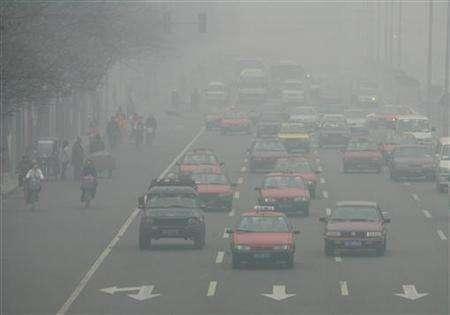
And while it could well be true that dirt isn’t all that dirty, it’s not just dirt that makes China dirty. Which brings us to a larger point about China in general. Like Li’s court, it’s dirty as hell. The polluted air is what you hear about when people talk of how dirty China is, and that’s not an exaggeration. But now that I’ve been here for 10 months, the smog’s not even what bothers me anymore. It’s the dirtiness, the germiness.

I came to China a little on the OCD side about germs. But instead of curing me of my germ aversion, China has merely made me more sensitive to it. And there are any number of things that Chinese people do that are downright gross. (Having now reread this post, I don’t know if there is any way for me to make this not sound discriminatory: the Chinese do a lot of gross stuff. But at the same time, I don’t know if there is any way to dispute the claim that, by the American standards I grew up with, it’s not true. That’s not to say the Chinese are stupid or mean or savage or lesser. I’m just saying that they have some tendencies that would never fly in America – just like Americans have tendencies that wouldn’t fly in China. I know that I am speaking from an American viewpoint, not a privileged viewpoint. Heck, maybe America is just too sensitive to cleanliness. This article and this article seem to hint at just that.)

You can’t walk one block on any remotely-populated street and not hear someone make a deep, guttural hacking sound – a telltale prelude to a huge loogy. Just yesterday I got off a train (I spent the last 10 days in Chengdu, hence the dearth of recent posts), and at the exit gate I looked down to see a pair of stringy, yellow-green clusters of stuff that used to reside in the area between someone’s mouth and lungs. To be fair, at least this person cleared their throat after they got off the train, which is more than can be said for innumerable people who added that putrid, hacking noise to the soundtrack of the 30-hour train ride. And in a land of 300,000,000 smokers, I can assure this is a never ending soundtrack. The staircases at my school, where parents conglomerate to wait for their children, are another hotbed for spitting. Really, all of China is a hotbed for spitting.

Then there is also the move where people blow their noses, but without a handkerchief or Kleenex. They just send the contents of their nose jutting toward the ground. When I was a kid we called this the “Texas Air Hanky.” The last time you saw it was either during a hockey game or on the streets of China.

It is also not uncommon to see little (or big) piles of vomit resting at the base of a tree. If you have to puke then you have to puke; I get that. But I’ve seen more ground vomit in my eight months in China than I did in my 24 years in America. And I’ve been to a lot of bars in America.

People are also apt to relieve themselves on sidewalks. “People” in this case could mean everyone from itty-bitty toddlers (who wear crotch-less pants for quick and painless popping-and-squatting) to old men (who know better but just don’t care). Quick story about public relief of the excretory system: my mom, dad and I came to visit my brother in China a few years back, and on a plane from Xian to Guilin, my dad was the odd man out on a seat, stuck sitting on the other side of the aisle from my brother, mom and I, who controlled our own three-seat section of the plane. Pa was wedged next to a little kid who was wearing the bottomless pants. (If you’re having trouble imagining what this looks like, just think if you cut a big oval-shaped hole in your jeans from the top of your zipper, through the legs, back around to the midway point of the seat. Or you could just >look here.) Well, this kid – seated about five-and-a-half inches from my dad – unloads his bowels then and there, right after takeoff. It gets on the mom a little bit, and while it didn’t actually touch pa, he nonetheless got an eyeful of doodoo. It was a cultural experience he could never have had in a land where parents, you know, make their kids wear diapers.

This may all seem like superficial stuff. OK, so there is spit on the ground. So there is a little puke tucked against the base of the occasional tree. So kids relieve themselves everywhere, but who has ever been successful telling a 14-month-old when and where to go? (Anyway, is having a bunch of soiled diapers that much cleaner than the occasional puddle?)

The thing is, it’s not all superficial. The eyesores are accompanied by a host of things are more than just eyesores. It really is dirty – and not just dirt dirty. It’s really dirty.

There are, for instance, no soap dispensers in public restrooms, save nice restaurants. (Beijing and Shanghai pay a little more heed to soap, but like I’ve said, Jinan ain’t no Shanghai.) The bathrooms at our school feature puddles of piss, and soap dispensers with soap that’s so watered-down it surely houses more germs than it prevents.

And it isn’t just our crummy school. It’s the country at large. There wasn’t a drop of soap on the train I got off yesterday. The people who handle the food you buy off the street don’t wear gloves on their hands – just a discernable layer of brownish crud that can’t possibly be clean. And those Texas Air Hankies don’t just happen on the street. The last time I went to McDonald’s someone was pulling the time-trusted maneuver in the sink in the dining area.

Like so many of the things I talk about on this blog, the germiness of China is hard to quantify (heck, germiness isn’t even a real word). How the Chinese are always drinking hot water, how much the Chinese like to stretch, how much counterfeit clothing there is: these things are all observable, but not necessarily measurable.

The same goes for the sanitation conditions. I haven’t the scientific prowess to conduct a study of the actual germiness of China – just the time and inclination to write about it and to make up words to describe it.

But even if I can’t convey in any sort of statistical way just how germy it is in China, I can rehash an event that beats home the sanitation issue.

After a 24-hour trip that started in Kansas City, I landed in Beijing in early September. If you recall, early September was at the height of the H1N1 craze – that is, the Pig Flu craze – and people were all in a tizzy about it. Especially in China. This article, for instance, entitled “China faces grim situation as H1N1 escalates,” was published the very day I landed in China. The country took to quarantining people – like this guy, a professor from the University of Michigan, and this guy, the mayor of a major U.S. city. If you rode on a plane with someone who turned out to be sick, you could be quarantined. If you coughed a little bit too much, you could be quarantined. If you looked extra fatigued, you could be quarantined.

As another precaution, there was a rapid spread of what looked like little plastic handguns that, when stuck up to someone’s forehead, gave a quick temperature scan. One of these guns/thermometers was pressed against my forehead as I exited the plane in Beijing. I was a little bit nervous, because anything from the mildest of temperature abnormalities to a slight technical malfunction could have landed me in a Chinese quarantine, something I’d rather not see first-hand.

By the grace of God, I waltzed through the sickness-detection chamber A-OK. (I was, after all, in fine health.) But after the lengthy flight and comp coffee, I needed to hit a bathroom when I got on the ground, so I headed for the nearest bathroom. It was just like an American airport bathroom – a cavernous room with urinal upon urinal against a teal-green wall. I relieved myself and, when I was heading out, beelined toward the sink to rinse up. The American equivalent to this WC would have had a bounty of soap and a hand sanitizer dispenser as well, just in case you’re too lazy to actually wash. (Even the Kansas City airport has hand sanitizer dispensers, so it can’t be that far-out of an addition. Like I said, I’ve always been a bit of a germophobe, so I notice these things.)

Alas, there was no soap in the bathroom. So one moment I was getting my temperature taken, an obligatory procedure that could well have landed me in a quarantine because Chinese officials are paranoid (justified or not) about the spread of H1N1. The next moment, I am taking a leak in a bathroom that doesn’t have any soap.

Li Ball’s court doesn’t have any soap either.

April 22, 2010

A New Court, II

Having stepped onto this court after months of suffering through the courts I’m used to, I feel like I’m biting into a steak after subsisting for months on gruel.

I proceed to walk east, along Jiefang Deng Lu – East Liberation Road (I think) – on the lookout for this college. At first it strikes me as odd that there would be a college within walking distance that I have never heard of or seen, but then again, Chinese cities have a way of hiding things, like a city in Grand Theft Auto. The combination of people and construction and traffic and sheer size endow some of these cities with a cloaking mechanism that will leave you scratching your head wondering, “Wait, how long has that been there?”

Word is that this university can be spotted by the bevy of construction taking place around the entrance. This is only so helpful, for there is seemingly construction everywhere. For someone in Jinan to say, “Look for the construction,” is equivalent to someone at a Kansas City Chiefs tailgate saying, “Look for the barbeque grill.”


I see plenty of construction, but no university. Having been told it’s a 15-minute walk, I turn around after 25 minutes, convinced I missed it, and plod back on the other side of the street. I still don’t see anything.

Through the thick cloud of noise – the honking, the construction, the groan of bus engines – I eventually hear the whack-whack of basketballs. It’s no university, but about 25 yards off to the right, appearing through a gap in the buildings, there is an apartment complex that forms a horseshoe around a basketball court. The open end of the horseshoe is blocked off by a narrow street. I tiptoe along that street and stop short of the court. I stick my hands in my pockets, lean my left shoulder against a brick pillar and survey the scene.

There are two men shooting and one watching. The two who are lofting the ball at the goal are probably 30, the onlooker probably 45. They spot me observing them and return the favor, eying me quizzically but without malice. I am torn on whether I should approach them. I haven’t, after all, ever played with these guys or on these courts, and I don’t want to be presumptuous. There is something to be said for simply watching, but still, it’s more or less habitual for me to want to play if I hear and see basketballs. And like I said, it’s beautiful today.

As I’m having this internal should-I-or-shouldn’t-I debate, a guy a few years my junior strolls past me and casually walks out onto the court. It’s like I was gawking at a pretty girl at a bar, trying to summon the gull to approach her, and a guy just walked right past me and asked her out. He grabs a rebound and proceeds to join them in tossing shots at the goal. Maybe he knew this girl before he approached her – maybe, that is, he lives in this cluster of apartments or works with one of these guys or whatever. At any rate, I feel a bit depantsed.

After a few more moments I join them. Before I even have to chase down a rebound, one of them passes me the rock – an invitation to shoot. I do and realize that the playing conditions are the best I’ve experienced in China. The court isn’t made of the usual slick, bald concrete, but instead some sort of composite, like a super-hard rubber. Now, it’s not the hardwood at Allen Fieldhouse or anything, but it’s not slick, bald concrete, either. There are no lumps or craters or cracks, and you can’t slide on it. What’s more, the ball is inflated too perfection. Ninety percent of the balls that I have played with have been more inflated than Pamela Anderson’s chest. If you hold one out in front of you and let it plummet to the ground, it will bounce back way higher than whatever height you dropped it from. They’re hard to dribble, they hurt to catch, and if you so much as graze the rim then the ball will swiftly bounce away, like a tennis ball off a racket. This ball, though, is quality, complete with a little bit of grip on the skin. And the backboard is glass. Glass! The rim is level and forgiving and – cherry on top – there is a net! Having stepped onto this court after months of suffering through the courts I’m used to, I feel like I’m biting into a steak after subsisting for months on gruel.

I have a spotty chat with the three guys, one of whom, the eldest one, knows a bit of English. They ask me a question that I don’t understand, and I shoot back, “I’m an English teacher.” A lot of times when someone spews a series of words that I don’t know, I just say, “I’m an English teacher.” I figure there are a lot of questions that “I’m an English teacher” could answer. Like, say, “What are you doing in China?” Or, “What is your job?” I’ve surely used this phrase at inappropriate moments, after being asked something like, “Do you like China?” Or, “Where are you from?”

This time, though, it seems to make sense. They nod knowingly and we continue to shoot around. Playing with this ball and shooting at this basketball is like steroids for my shot; it’s as though I’ve been playing with gloves since I got here. After warming up with some short jump shots, I scoot back to the three-point line, which is immaculately clear – a stark white against the algae-green court.

I launch a triple from the left wing. Swish. The older man – who seems more and more like the patriarch of the court, observing but not playing – says, “Hao qiu!” Good ball! The ball lands gently at one of their other guys’ feet, and I get my change, the first time that’s happened in China.

I dribble from the left wing to the top of the key and let fly with another three-pointer. Swish. Hao qiu! There is something about this goal, this ball, this beautiful afternoon – it feels so easy to shoot. I get my change again, not knowing if it’s because they are being nice or because they want to see me repeat the feat. I move to the right again, now on the opposite wing and right in front of the older man who is standing just out of bounds, observing with his hands behind his back, his shoulders and chest open in a dignified kind of way.

I shoot another one. Swish. I let out a little chuckle after the third one, not because I am impressed with myself, but because I am enjoying this more than they could imagine. Equal parts warmth and chill in the spring air; an uncannily healthy court; nice people who are lauding my shooting – and even giving me my change!


Not wanting them to get bored with this shooting exhibition, I move not to the right or left, but instead take a big step backward. I prepare for the incoming pass while the ball is in the air, taking the slightest of hops to set my feet, which touch the ground the instant the ball hits my fingertips. I shoot again. Swish.

I scoot back again and miss the fifth one. The ball bounces off the rim right back at me, but fearful that I am monopolizing the proceedings, I chuck a one-footed trick shot at the goal, a shot that has about a 1.43 percent chance of going in. Swish. Just kidding – it’s an airball.

Four of us shoot around for about 10 more minutes, under the watchful eye of the sage standing on the right sideline. I go over to the fence lining the adjacent street and peel off my fleece, slipping the neck of it over one of the iron rods. Then the sage comes over and asks for my number. He asks in Chinese, and I’ve absolutely no idea what he said. He then says, “Telephone,” in English and pulls out his cell. Now I get it. I tell him my digits and eagerly snag my phone from the coat hanging on the fence. He is calling me, and I slowly ask him his name. He understands the question and tells me. It’s Li. I store his number and put my phone away. He then tells me that they play on Tuesdays and Thursdays and that he will call me to play. I do everything I can to convey my eagerness.

Two more guys show up to play and we start a three-on-three game. I thoroughly enjoy myself even though my team loses more than we win. A seventh guy shows up and is appointed to our team by Li, who must have felt bad for us. It’s crazy, but I don’t care that we’re losing. And I don’t care that the legitimacy of our three-on-three game has been tainted by having an odd number. These are things that would usually drive me crazy. Now, though, I just can’t be bothered. Heck, I’m even oblivious to the score. Li is the scorekeeper, and when a game ends he announces as much. But I never know what’s going on until he declares a game over.

After one game, a guy goes over to check his phone. Li uses the timeout to introduce me to everyone. For the life of me I can’t remember their names. They were all quintessentially Chinese-sounding names, like Wang and Zhu and, for that matter, Li. I remember only one name: the shortest, chubbiest person on the court introduces himself as Tom.

Li eventually sheds his jacket and ditches his post along the sidelines. He is playing in dress shoes. He’s an alright player, the type of guy who you can tell was probably quite good when he was younger, the type of guy who knows what he should do on every single play but whose body doesn’t always allow it.

I end up playing for nearly two hours. I give a hardy round of goodbyes to everyone and walk out the same way I came, hoping to eventually get a call from Li.

April 12, 2010

Trash Springs Eternal

It’s a day packed with the relief of good weather and the realization that more bad weather surely lies ahead.

Turns out weather reports are wrong here, too. March 4, which was supposed to have a high of around 40 with rain showers, has turned into a February 23 incarnate. I start the morning by watching an online stream of the Kansas Jayhawks versus Kansas State Wildcats game (we’ll miss you, Sherron!), then I write for a few hours, and then I realize that sun is pouring into my room. I go outside and realize that, indeed, it is borderline glorious. It feels like spring, and of course, spring means basketball. So off to the courts I go.

I’m not a stranger to the Shandong Normal University campus. Indeed, I was here yesterday, plus I was here about a half-dozen times last fall, before the sun went on its four-month losing streak. But never before have I been struck by how much the campus – at least parts of it – could pass for an American college campus. There are birds and bikes and brick buildings, plus that intangible feel of the university setting. I’ve always thought that college campuses have a certain aura, kind of like some days of the week have a feel to them. There are few places that I’d rather traipse around than a college campus – and even fewer places I’d rather traipse around than a college campus on one of the first beautiful days of the spring. It’s a day packed with the relief of good weather and the realization that more bad weather surely lies ahead.

As I walk up the slight slope leading to the courts, I can see balls looping along the horizon, making that tell-tale arch en route to the basket. I see them before I hear them and am infused with excitement. I was programmed back in college, when I used to break into the campus dome by my lonesome, to expect to play solo. It was a Pavlovian reaction: I would see a basketball court and anticipate solitude, which isn’t necessarily what I want. But today, people are out. Not in droves, per se, but they are out. I’ll be able to play in a game.

I go left upon crossing the entrance gates and plop my stuff down along the 18-inch-high wall running along the court. I am immediately summoned into a game. We gather round and someone starts spinning the ball, letting the laws of physics dictate who will be on whose team. It’s three-on-three, and I am cast into a game before I’ve had the chance to shoot a single shot.

We’re not keeping score, and I notice immediately that my mind is wandering. This is partly because I have trouble getting into these no-score contests, but also because I am looking around, trying to lay the groundwork in my mind for what exactly I want to do with this Web site. I refuse to let this blog devolve into daily play-by-play recaps of my games with these Chinese people – I went eight-for-10 yesterday! Whoo! There are stories here, I know, and I want to tell them. So because I am not yet warmed up, and because these games where no one keeps score are inherently drab for me, I scan the concrete horizon, probing, letting the various scenes sink in.

Two things stand out over everything else: A pair of bottle ladies, and the guy who is selling water and sports drinks. By “bottle ladies” I essentially mean scavengers – ladies who loiter around the courts and collect the discarded plastic bottles of those playing. Indeed, their livelihood and the little old man who sells the bottles are intrinsically tied together; he starts the cycle by selling bottles, and they complete it by picking them up. Right now the bottle ladies are sitting along the nearby wall, about 20 feet down from where I tossed my bag and jacket. One of them is exceptionally old – or at least looks it. The skin on her face has lost every ounce of its elasticity; her cheeks are droopy and wrinkly. Her eyes are hooded, partially eclipsed by the her sagging eyelids. She has her left hand resting on the knee of the other woman, who appears to be in her 50s but, by comparison, looks like a virtual adolescent.

Every five minutes or so, the two ladies rise and go in different directions on the hunt for empty bottles. At one point while I’m playing, I see the elder one approach a row of three guys sitting by the base of our basket. Her gait is tired. She doesn’t drag her feet, but each step is measured. Her hands are clasped behind her back.

The guys sitting on the baseline obviously know what she wants. They’ve likely seen her do this routine before, and if not, the three plastic bottle she has already retrieved are a tip-off. She extends her hand to one of them in a non-verbal request for his empty bottle, and the kid – he’s probably 20…still a kid in my book – flips it at her, end-over-end, like a punt in football. Though she was standing less than three feet away, the toss falls at her feet, hopelessly short. It’s a startling display of disrespect. First off, he could have waited two seconds until she was close enough to simply hand her the bottle. Or, if he was hell-bent on testing his short-range accuracy, he could have at least tossed it waist-high, you know, so she has a chance of catching it. But no. He throws it at her feet, a kind of Eff you to a little old lady collecting bottles. Who knows, maybe she is a real nuisance. Maybe she is a witch to the guys who play basketball. Maybe. But on the surface, it looked like an able-bodied 20-year-old blatantly disrespecting a partially-feeble old woman.

You can find bottle ladies like this all over China. The nation’s recent surge in consumerism has spurred a recent surge in garbage. And this, in turn, has turned trash and recycling into its own business. According to the Web site Facts and Details, China produces 254 millions tons of garbage every year – about one-third of a kilogram per person, per day. That equates to a third of the world’s annual garbage output; not bad for one country, huh? This garbage comes in all shapes and sizes.

Go to any convenience store, and you’ll see various items wrapped four times over. One of my favorite Chinese treats are these long, straw-shaped cookies that are stuffed with a filling of your choice – chocolate or strawberry or whatever. Well, to get to the cookies themselves, you first must bust open the box. Easy enough. Then, though, you must pierce the inner bag which actually houses the cookies. That’s not all. Once you are inside that bag, you’ll see that each cookie is individually wrapped. So that’s one way the trash piles up here – things are packaged to high heaven.

And not just candy. A restaurant that I frequent brings you chopsticks upon arrival. The chopsticks come inside a glossy paper pouch – to get to the utensils, you have to bust open the pouch. Once inside, you’ll also see a few napkins and a moist towelette; the towelette has its own packaging. And that’s just the chopsticks wrapper. The dining experience also comes with a set of glasses and cups and plates – which are shrink-wrapped in yet more plastic. So each time you go to this restaurant, you consume some chopsticks, some paper packaging, a few napkins, plastic shrink wrap and the moist towelette. These are mundane examples compared to the big stuff – mufflers and tires and furniture – but with 1.3 billion people here, little environmental transgressions quickly become big ones.

One common denominator to each of these billion-plus people is the need for water, which means a good chunk of this garbage comes in the form of plastic bottles. The tap water, after all, is undrinkable, and it’s not like there are water fountains in buildings or at parks to steal a quick drink. Plastic bottles, therefore, are ubiquitous.

On the surface, there appears to be some combination of disdain, apathy and ignorance regarding the gratuitous amount of trash in China; I probably shouldn’t have to dig through three layers of packaging to get to my eating utensils. But there is nonetheless a market for that trash to be turned into profit by men and women – like the ones at the court today – who collect it and sell it to recycling companies. And not just plastic bottles: trash bags, tin, rubber and glass are all also hot commodities on the recycling market.

A New York Times article from 2006 chronicled a group of scavengers from a trash dump near Shanghai. One of the scavengers, 46, whose daughter had recently been admitted to an elite school, told the Times: “We worked really hard as laborers before, doing 12- to 15-hour days for a mere few hundred yuan. You have to work even if you are sick or tired. Here we are working for ourselves, and there is a lot more freedom – four to five hours a day, plus we can earn a lot more.” Another scavenger – “garbage picker,” as the article calls him – was a 23-year-old man who supported his 60-year-old father, solely with proceeds made from collecting recyclable trash at this dump. “Don’t be surprised, it’s normal,” he said.

Scavenging for trash is definitely normal at Shandong Normal, where ladies like these can be seen milling about every day. The eldest of the two has returned from her trash-finding expedition and has again parked herself along the wall lining the court. Her friend is still on the prowl.

A few minutes pass and our game is halted by a cell phone-induced timeout. I drain my own bottle of water and walk over to this lady. I hand her the empty bottle. She looks at me with those droopy eyes, clutches the bottle with two hands, says thank you (“Xie xie!”) and tilts her heads and shoulders in the slightest of bows. I essentially just gave her an iota of money, and she seems grateful.

Meanwhile, that old man is still hocking water and drinks. He is always really nice to me, even though our conversations are confined to my piss-poor Chinese vocab and his even worse English vocab. “OK” and “Hello” are the only words he seems to know, and the fact that today he says “Hello” to me as I am leaving casts doubt on how well he understands even those two words. But he knows these courts. He is here literally every time I am, and he is always smiling, always seeming to enjoy himself.

The bottles on his table are impeccably arranged. There are two different brands of water – one with a red cap, the other blue – and each brand is given two identical rows stretching from front to back. Next to the water are two columns of little bottles of Gatorade, and next to those are two columns of big bottles of Gatorade. Naturally, the Gatorade is color-coordinated.

From what I gather, the bottle ladies and the refreshment stand guy are staples of the courts. They have been here every time I’ve been here dating back to last fall, and they seem integral to the proceedings. Without the bottle ladies, bottles would be strewn about everywhere, blowing around in the breeze and adding yet another health hazard to already dangerous list of elements – potholes, cracks, etc. – that players must negotiate. And without the bottle guy, we would all be thirsty – plus the ladies wouldn’t have anything to do. They are part of the fabric that ties together basketball on the courts of Shandong Normal University.

As for the actual basketball on March 4, there really isn’t much to report on. Unlike yesterday, we never graduate onto games where the score is kept, and save a little hot stretch for me, I don’t play particularly well. But it wasn’t a fruitless outing. I took another step toward demystifying my presence at SNU, plus between the bottle ladies and refreshment guy I have a more than a few questions to ask.

April 11, 2010

Not Keeping Score, Learning the Dress Code, I

For a while, I wondered if the guys were treating the basketball like some sort of Magic 8 Ball, spinning it and waiting for an answer. In a way, I guess that is what they are doing.

It’s Wednesday, March 3, and a dreary 43 degrees outside. But according to the seven-day forecast, this is going to be the best day to play ball for the next week. Thursday calls for rain, Friday will be 34 and windy, and Saturday starts a four-day temperature plunge culminating in a horrid Tuesday that WeatherBug.com has summed up with a picture of an igloo. They predict a high of 19. So today is the day.

I hop on my bike at about 12:30 and make the 20-minute trek to Shandong Normal University. I make the left turn through the gates of the campus and I am greeted, as always, by a towering gold-colored statue of Mao Zedong, the former leader of China’s Communist Party who died in 1976. (Lest this site gets banned, that’s all I’ll say about him.) This statue, like so many others, shows Mao striking a waving-to-the-crowd pose that can easily be mistaken for a waving-down-a-taxi pose. His right arm is fully extended, his fingers outstretched. In front of Mao is a common area where, presumably, people can gather and hang out. But even though today will boast the best weather for the next week, it’s still kind of crummy outside. No one is gathered in front of Mao, and I cruise on past.

A minute later the basketball courts appear on my right, encased by an ugly-green iron fence with thin poles standing vertical every five inches. There is no one on the near courts behind the fence save one guy who is shooting by his lonesome. I ride another 50 yards until I reach the main entrance where, sure enough, I see some people playing. On one court there is a five-on-five half-court game, and on another there are five dudes just shooting around. There is only action of two of the 22 courts, but at least there is action. Actually, three courts are occupied: off in the distance, that lone guy is shooting by himself, over and over. I’m intrigued by his routine because it is one that I’ve done a million times. While I am gazing around, one of 20-somethings in the five-man cluster extends his right arm and waves me over, slightly reminiscent of the Mao statue. That settles it. I’m playing with them.

I flip down my kickstand and peel off my backpack and fleece jacket. I move to take off my brown corduroy pants, under which are a pair of dark red Nike basketball shorts, but I hesitate. There is no one else out here wearing shorts, partly because it’s still kind of chilly, and partly because, in China, men pretty much always wear pants. Today there is a sampling of different types of pants: blue jeans, sweatpants, those goofy wind-breaker-warm-up things. But no shorts. After a moment’s deliberation I decide I’d rather be the outcast wearing shorts than play basketball in cords. So I go ahead and strip down and trot on out to the court wearing a white long-sleeve shirt, the red shorts and a black stocking cap. I am the only person wearing either shorts or a stocking cap; there will be no fitting in today.

They have five guys already, so I am the missing link for three-on-three. First, we need to decipher teams. In the States, there are generally two ways that teams are picked, at least where I’ve played. Most often, you shoot for teams – that is, the players gather at the three-point line (or free throw line) and start shooting. The first three to make it are on one team, the other three form the second team. (This is also the best method if there is an odd number and someone must sit. If you’re sitting, it means you didn’t make it. It’s merit-based.) There are variations of this, like the first person to make it is on Team A, the next person is on Team B, the third person Team A and so on. The other common way of splitting up teams is having the first two people who make shots be “captains” and simply choose who they want.

It’s different in China. The six of us gather around in a small circle, and one guy holds the ball out in front of him like he’s offering it to the other five players. He then spins it like a top and lets it come to a rest on his fingertips. Every ball has a small black circle where you can pump air into it, and that’s what we are looking for as gravity and friction bring the ball to a halt. Whoever that black circle is facing when the ball stops spinning removes himself from the circle; he’s been selected. The process is repeated however many times it needs to be until the teams are deciphered. It took me a several trips to the Chinese blacktops to understand what exactly was going on when we circled up like this. For a while, I wondered if the guys were treating the basketball like some sort of Magic 8 Ball, spinning it and waiting for an answer. In a way, I guess that is what they are doing.

The game starts and no one is keeping score. This isn’t uncommon here, but it’s still strange to me. Back home, the score is everything. The import of keeping score has been immortalized in a few notorious exchanges from 1990s basketball movies, White Men Can’t Jump and He Got Game, both of which are worth watching.

This is from the 1992 film White Men Can’t Jump, starring Wesley Snipes and Woody Harrelson.

Sidney Deane (Snipes): Hey. Hey man, what’s the score? Yo! Chump! I’m talking to you! I’m talking to the fucking air.

Billy Hoyle (Harrelson): My name ain’t chump, it’s Billy Hoyle.

Sidney Deane: Billy Hoyle. Billy Hoyle! Billy Hoyle! Okay Billy…can you count to ten, Billy?

Billy Hoyle: Yeah.

Sidney Deane: Good. What’s the score... Billy?

Billy Hoyle: I don’t know.

Sidney Deane: Then you’re a chump.

Billy Hoyle: I may be a chump, I just said that wasn’t my name.

And this is from the climactic scene of the 1998 drama He Got Game, featuring Denzel Washington and NBA All-Star Ray Allen. In this scene, Jake Shuttlesworth (Washington) is trying to get his son, Jesus Shuttlesworth (Allen), to sign a letter of intent to a certain university.

Jake: I’ll play you, one-on-one, to 11. I win, you sign. You win, you do what you wanna do…

Jesus: You wanna play me one-on-one?

Jake: One-on-one.

The two then duke it out on the court, announcing the score after every basket. Jesus eventually prevails, prompting this:

Game time. What you looking around for? That’s game – 11-5. Someone call a stretcher. Stick a fork in him – he’s done.

The importance of the score isn’t some Hollywood fabrication. Everywhere I’ve ever played, the losing team sits. And there are two intrinsic truths to that practice: (1) there can’t be a losing team unless you’re keeping score, and (2) sitting isn’t as fun as playing. My friends and I back home always took great pride in winning as many consecutive games as we could – monopolizing the proceedings by “holding court.” The score is omniscient. People declare the score after every made basket, and it’s not at all uncommon to hear arguments about the score. It’s important.

Needless to say, when no one is keeping score, it isn’t as competitive. And there’s something about that that just seems odd. The notion of having a winner and a loser is, to me and to most American basketball players, intrinsic to the game, even pickup games played outside. And it’s not like people only keep score when dudes are waiting and we need a way to regulate playing time. I keep score when I play one-on-one with my brother or friends. I keep score when there are four of us – and no one waiting – playing two-on-two. Three-on-three, four-on-four – unless I’m shooting around by myself, I have always kept score. Hell, when I was younger I’d sometimes play imaginary games and keep score when I was by myself.

One time last fall, before it had gotten cold, I was playing in a game where no one was keeping score. An English-teaching buddy said to me, “You look bored out here. You about to fall asleep?” I chuckled and proceeded to snare a rebound, as if to prove I wasn’t bored. Thing is, I was bored. The incentive, the competition had been removed; keeping score is part of the game. Not always here, though, and that’s one of the things I’ll be watching this summer: Why do these guys play games – of seemingly indefinite length – where no one keeps score?

Our game starts and there is no sense of urgency, turnovers aren’t a big deal, defense is generally lax, it’s just different. We are playing make-it-take-it – if you make a shot, you get the ball back on offense – which is how it usually is Stateside. This, and maybe pride, is the lone incentive to score – simply so you get the ball back.