July 7, 2010
Wasted Possession: Alcohol and Hangovers in China
July 5, 2010
Spurning Soccer For Basketball: An American Sports Epidemic
June 30, 2010
Cultural Crossover Comment Chat
One thing that proxy servers can’t do, however, is allow me to post comments on my blog. (At least the proxies that I use.) There have been a number of comments that were insightful, and a few more that asked me specific questions or made specific criticisms. But I have never responded to any of these comments – not because I didn’t want to, but because I can’t. Don’t ask me why I can post articles but not leave comments. (Don’t ask, either, why a blog about basketball is blacklisted in China.)
So in light of the fact that people have left some comments on my blog, and in light of the fact that comment board banter is, at this time, impossible for me to engage in, I’d like to discuss some of the comments that have been left.
This first one is from Cultural Crossover’s No. 1 commenter, Hopfrog.
First off, your being a total wuss, more on that later….
You know how many success stories begin with “I was down to my last dollar....” or “I hocked everything we owned...”. Your going to sit on the sideline because of some debt? Yeah, a big arse chunk of debt, but are we talking about your dreams or just some job you think would be ‘neat’. It sounds to me like this is your dream man, and if thats the case, it shouldn’t even be a question. People that know you probably don’t want to tell you to go for it, and feel guilty if you don’t make it and become straddled with debt.
Sure, there is a point to be made that it is a different world now, but come on, who’s getting that job with SI or ESPN, the guy with talent and a NW journalism degree, or the guy with talent who really wrote some cool stuff on his blog!...
If its not really your dream, then please, don’t even think about doing it. But you clearly have the talent and if this is the one thing that you really want to do with your life, well, then....
Sack up!
This comment was in response to a three-part post that began with my angst over graduate school and ended with a lengthy discussion about swindles in China. (By virtue of having been linked to my mega-China blogger Danwei, I think these may be my most-read posts.)
At the time, I was mired in contemplation/anxiety about whether or not to attend Northwestern’s prestigious master’s in journalism program at the world-renowned Medill School of Journalism. Any frequenters of the blog, or anyone who read the biographical posts at the outset of Cultural Crossover, knows about my journalistic ambitions. I want to be a sportswriter but, having graduated into the shitshow that was the 2008 U.S. Economy – and the coinciding implosion of American newspapers – I couldn’t find meaningful work to save my life. After some freelancing gigs, a too-long stint at a local library and a few heartbreakingly close sniffs at newspaper jobs, I became resigned to the fact that I may as well escape my parents house and go teach in China.
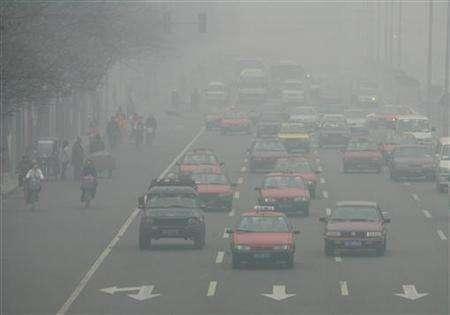
I never wanted to become a lifer in China, however, so I took the GRE right before I left and then applied to graduate schools during the bleak Jinan winter. Sending out applications endowed me with a moment of hope-inspired warmth before I would leave the post office and traipse down the smoggy and bone-chilling streets of Jinan.
I heard back in March that I was accepted to Northwestern’s journalism program among a few others. This was huge news for a wannabe journalist like me because Northwestern is simply THE program for journalism. (Sorry, Missouri. It’s true.)
The problem, though, is that the one-year NU program costs a comical $84,000. What’s more, they offered me only $12,000 in scholarships. Thus, to attend Northwestern, I would have to swallow $72,000 in debt (about $95,000 after interest, according to a financial advisor).
Now, 72K isn’t a big deal in the world of law, or the world of medicine, or business. But journalism? Boy, that’s a gamble. So I shot out emails to a bunch of trusted confidants in the journalism biz, and not a one told me to jump at the opportunity. Instead, they all talked about (a) how a master’s degree could help me be a teacher, and (b) how a master’s wouldn’t guarantee a job in the industry, how it wouldn’t impress anyone.
In that initial post, I surmised:
So there it is – how it’s possible to have the best news of the year turn into the worst news. Congratulations! You, the 24-year-old desperate to be a journalist, have been admitted to the best journalism school in the country (world?)! Now, here’s your piddly financial aid package. Go find $70,000 – psst…it’ll be more like $95,000 when all is said and done – and come on board!
Part of me wonders if I am just being a wuss, if I need to bite the bullet and swallow the debt if this is really what I want to do. Another part of me wonders if that is a decision that could ruin the next 10 years of my life.
Well, Hopfrog gave his opinion: That I was being a wuss. That if I really wanted to be a journalist – and wasn’t just paying lip service to the idea for dramatic effect – then it would be foolish (and wuss) of me not to go to Northwestern. And that’s fair.
In the end, though, I decided not to heed Hopfrog’s advice, and punted on Northwestern. (Actually I deferred my enrollment, so I could, in theory, go there next year. But I will never, ever pay $70,000-plus for a degree that doesn’t guarantee me a job that I want, and there is no journalism degree, not even from Northwestern, that could insure a job.)
Hopfrog makes valid points, but I don’t know that he has enough of a grasp on how bleak the U.S. journalism industry is right now. It’s worse than stagnant.
If I were to go to Northwestern, I would finish up in August of 2011 and be $70,000 in the hole. Even supposing that the U.S. economy begins to right itself (hardly a surefire proposition), the journalism industry will still be turned on its head. Bloggers and fan sites and ESPN will own such a huge chunk of the industry that it just isn’t a good bet to think that a degree from Northwestern will be a ticket to a job. It doesn’t work like that if there are no jobs.
Maybe I could find a job at a smaller paper, in a place like Lawrence, Kan., or Bloomington, Ind. – some college town or something similar. But those gigs pay in the $30,000 range, and if I were coughing up $9,500 a year to pay off loans, then I am basically working a $20,000 per year job. And maybe I could catch on with an online outlet, but the problem with online journalism at the moment – really, the systemic problem with the industry as a whole – is that online journalism isn’t generating any money.
My prediction – and I want to get in print so I can have a good I told you so! to play with in the future – is that Northwestern (and every crazily expensive journalism school) is going to cut its prices DRASTICALLY in the next three years, five years max. My prediction is that the crop of kids going to Northwestern and Columbia and Missouri in 2010 will go down as one of the last ones to get duped into paying anywhere near that much money for the chance to enjoy unemployment in a crumbling industry.
Think about it. Newspapers (and the journalism industry as a whole) really started to fall apart in 2008. The group of kids that would have gone to graduate school for journalism in the fall of 2008 were already signed up by the time papers started sharing copy, by the time long-time writers began to get the axe, by the time that even the most qualified youngsters couldn’t get that first job (me among them). The 2009 crew knew what was happening, but when they were accepted in early ’09, they could have still deluded themselves into thinking that the economy and journalism industry would right itself in the next year or so.
Now this 2010 group, which like me was accepted into these schools in early 2010, will be at the mercy of the new face of journalism: Bloggers who are more on top of stories than anyone (but don’t make dick for money), a shrinking number of outlets that occupy a growing chunk of the market, newspapers and magazine that are paper thin, that are still shedding staff, that appear to accepting that theirs is a fate of less content and fewer writers.
So, that’s why I am not going to go to Northwestern. Charging $84,000 for a one-year program in journalism, even if it comes with the Northwestern brand name, is tantamount to a money grab. Northwestern and other schools could charge that much in years past under the guise that it would land kids a job in the industry. Well, not anymore. The industry that we knew is gone, and so are the jobs that warrant paying that much for a degree.
This is one of the last years that people who are smart enough to get into the program will be foolish enough to not see the writing on the wall.
What I’ll be doing instead of Northwestern is getting a Master’s degree in journalism from a well-reputed Danish university, starting this fall. I received a full tuition scholarship, and I am confident that I can cobble together enough money to pay for the living expenses in Denmark. I have absolutely no disillusions that a master’s degree from Denmark will be some invaluable asset when I graduate and try to get a job in the States. Indeed, employers may scoff at the idea of hiring someone who went to school in Europe. But then again, the chance to attend school in a country like Denmark and not pay a dime for tuition is cool unto itself. Cooler than being saddled with $10,000 of debt each year until I’m 36.
Just wanted to agree - White Men can't Jump really is a classic - for a basketball player who only got into the game (from the UK) at 16 in the mid-90s it showed what basketball could be. The other one I'd describe as a classic if “He got game”.
Never got into the stretching thing before the game though... even living in China.
Doug made this comment on a post that used the film (work of art, really) White Men Can’t Jump as a springboard to talk about stretching in China. You see, in White Men Can’t Jump, there is a great scene where the movie’s lone white man, named Billy Hoyle (played by Woody Harrelson), is stretching along the sidelines. He is mocked by the all-black cohort of players, including his future buddy and teammate, Sidney Dean (Wesley Snipes). “What’s this mother f&*% doing? Stretching?”
Unlike Doug, I was never quite as into He Got Game. It does have some awesome scenes. But there are also aspects of it that are shamelessly superfluous, seemingly little more than a way for Spike Lee to make the film 30 to 45 minutes longer than it actually should be. Seriously, why does the dad of Jesus Shuttlesworth need to develop a love affair with a prostitute? Couldn’t he have just gotten a prostitute, and that could be that? That storyline goes nowhere, yet still Lee dedicates a not insignificant chunk of the movie to Papa Shuttlesworth’s courtship of a hooker, in the process forfeiting an incalculable number of chances to show Ray Allen jump shots.
Anyway, I still love the Chinese’s gratuitous stretching, and the fact that I can walk down the street flapping my arms or holding my hands high above my head and not get looked at like I’m some sort of freak. Strike that – in Jinan, anyone with white skin gets looked at like they’re a freak. But at least I’m not getting the raised eyebrow because I’m stretching. Just because I’m a white man (who, by the way, can’t jump).
Interesting stats about lefties. Being one myself, I guess I never knew that only ~11% of us are that way. For what it is worth, four of my nine players on our youth basketball team were lefties. Three of them were guards. I think lefties have an advantage, especially in youth hoops because defenders just aren't used to guarding their strong hand.
Jim V left this comment on “No South Paws in the Far East,” a post about how lefthandedness is discouraged in China and, by extension, how there are no lefty ball players.
I totally agree, Jim, that it throws off youngsters when they try to guard lefties. It’s a quirky thing to deal with. What’s also neat about lefty ballers is that they look downright cool when they play basketball, or at least when they shoot. I don’t know if I’ve ever seen a sweeter jump shot than former Missouri star (and therefore sworn nemesis) Kareem Rush, who had this buttery lefty stroke that, if flipped to the right, would probably just look like any old run-of-the-mill J. Other aesthetically pleasing left-handed shooters: 2010 Kansas Jayhawks freshman Xavier Henry; Milwaukee Bucks guard Michael Redd; former NBA guard and pothead Damon Stoudamire. No word on whether or not Jim V’s stroke is pure or not.
Michael Jacksson said...
buy viagra
viagra online
generic Viagra
Michael Jacksson left this on what was, in my mind, one of this blog’s better posts, “Up Fake: China’s Booming Fake NBA Market”. The post dealt with the interesting topic of fake, or jiade, goods in China, particularly the fake NBA stuff, which I seem to see every single day. Thanks for reading, Michael.
I have been loving your writing and particularly love that you are Suns fan. I caught the Spurs Suns game on Sunday morning where Dragic the Dragon played an amazing 4th quarter (talk about spindly!!) and where Barbosa really showed up. I don't know about Jinan, but here in Beijing I thought the Meng Niu ads with highlights were really cool... I mean the milk graphics and a milk BBall!! WTF?
But I hear you on the commentary.. I have been following to Suns here in China since I moved here from Phoenix in 1995 (yep, i was in Phoenix during Sir Charles and Thunder Dan's days!!) and have had lots of fun picking up Bball vocab to talk NBA with the Beijing taxi drivers.…
Thanks, Tianrui. I appreciate it. I wrote that post before the Suns’ season was ended in sickening fashion by the Lakers. One can’t help but wonder if they would have won that Lakers series had Ron Artest not put in that buzzer-beater in Game 5.
I went nuts when Jason Richardson banked in that ridiculous three-pointer to tie the game. Of course, as luck would have it, Kobe Bryant – the best clutch jump shooter in the game – then proceeded to airball his game-winning attempt by five feet, and Artest squirted in there to get the rebound and put up that awkward, old-man lay-up. Killer way to go out, but then again, it’s a Steve Nash team, so it’s only fitting that there was a dastardly twist. With Nash, a loss is never just a loss.
It’s just incredible to think about the various ways in which Steve Nash has been screwed over in the playoffs: Tim Donaghy fixing games in 2007, Tim Duncan’s hitting his first three-pointer of the season in 2008, Ron Artest playing the role of hero in 2010. I don’t feel too sorry for guys who get paid millions upon millions to play basketball, but if I did, I’d definitely feel for Steve. And now that Amare Stoudamire has opted out of his contract, and now that Jason Richardson and Grant Hill and Steve Nash are all a year older, it really is a shame he won’t win a title.
The slang in Beijing is mostly the same, 我靠 tends to be what I hear most often in terms of beifanghua.
Jim wrote this on a post dedicated to the different slang terms that I hear on the basketball court here in China. Even when I return to the States, I have every intention of shouting Mea you!!! when someone takes a stupid shot. The term – which is prevalent on courts in China – means “don’t have,” and is pronounced more or less like mayo. People will think I’m talking about condiments. I give it a two percent change of catching on and becoming a nationwide phenomenon.
Have you thought about foregoing this blog and pitching this idea to a book publishing company?
Jim V wrote this on an early post when I laid out what this blog was about. To be honest, yes, I have thought about trying to write a book about basketball in China. But my apathy toward learning this bizarre language will probably prevent such a thing from ever happening. Since you brought it up, though, I’m convinced that I should write a book about something, if not playing basketball in China. A book would be a way for me to write non-fiction and at the same time skirt the journalism industry, which, of course, doesn’t seem to have any interest in ever welcoming me aboard. I can mark you down for a copy, right?
Hi,
Being a Bball nut also, I thoroughly enjoyed your post on the Chinese BBall experience.
I guess Bball skills brings out the “macho man” in most of us and keeping score and dominating is affirmation of manhood.
Maybe, the average Chinese Bballer is less “confrontational” or competitive in some of these situations since they know each other well ( and each others families ? ).
I know that when I played ping pong ( table tennis ) with skilled players , they didn’t try and beat me to death and make me cry. :)
They were gracious and give up a few points here and there.
Thanks, LA Guy
LA Guy has an interesting theory, which he discusses on an early post in which I express my bafflement at how Chinese players often don’t keep score. In the States, I’ve rarely played in games where people don’t keep score. There are any number of way in which score is kept. In HORSE we use letters; in five-on-five it’s generally the case that threes count as twos, and twos as ones; in “21” everyone seems to have their own nuanced scoring system. My experience in the States was that unless you’re playing by yourself, basketball is a competitive endeavor. Not so here.
I was in Orlando when we first got T Mac and he was going to be the guy that got us over the top. Of course, we heard that when we got Penny, and when we got Shaq, and what we really got was swept by the Rockets.
It was clear early on that T Mac wasn’t going to win any championships. For pretty much the same reasons that I don’t see Orlando doing squat with Vince Carter.
My immediate guess for his popularity was for being a Rocket and your entry confirmed it. At least Shane Battier gives 100% and has become a defensive monster, he deserves to be popular somewhere. I’ll take a team player like that over the T Macs anyday….
Hopfrog left this comment on this post – one of my favorites – which discussed the popularity of Tracy McGrady and then looked at why T-Mac is still popular here ever though he can hardly play anymore. The Cliff Notes on his popularity: Yao Ming and adidas.
That’s it for now. Thanks as always to everyone who reads this and comments. I appreciate it. Until next time…
June 26, 2010
A Sick Move, I
Indeed, I still make the trek over to SNU sometimes. But Li Ball’s court, which is right up the street, has supplanted it as my favorite place to play for reasons that transcend proximity (although in a city of millions with shoddy public transportation, and with a motor bike that is broken as often as it’s not, proximity does play a factor). The backboards at Li’s court are glass, the balls are always properly inflated (and won’t scrape the clouds like they often do at SNU), the court is perfectly flat. The flatness of a court, at home, would be a no-brainer – like saying an infield had dirt. But in China, where cracks and divots and cancerous lumps dot courts everywhere, having a flat court is a veritable luxury.
Li Ball is the one in the white shirt.
And then there are the players themselves, starting with Li Ball, who I like to think of as the court’s Don Corleone. There he is, after the games have ended, welcoming the players over the base of the goal where he sits to cool down. “What is it?” he would say. “What can I do for you? You know I can’t say no on the day of a basketball game.”
Even if Li doesn’t possess Corleone-type power, he is nonetheless the most prominent figure at the courts. He is the one who always calls me to play; he is the one who dictates the teams; and often times instead of playing he’ll instead stand attention along the sidelines, dishing out officiating decrees and announcing the score in a way that is never questioned. This is a welcome change from the games I used to play at my old stomping grounds, 24 Hours Fitness in Kansas City, Mo. There, berserk argument would erupt about the score at least once a week. There was of course bickering about foul call, which is to be expected. But the score is the one thing that is subject to the unbending edicts of mathematics, and even that would inspire incredulous shouting and cussing the likes of which never failed to make me laugh (and cringe) with exasperation. Sometimes when these arguments would flare up, I would just dip out in the hallway and get a drink of water while people bitched about the score. All too often, nothing was settled when I came back. Part of the problem was ego; part of the problem was that if a team lost, they could be sitting for up to 30 or 40 minutes. Thus, no one wanted to lose, even if it meant forgetting/flubbing the score in your favor.
There is none of that hear, though. Li Ball is in control.
There even seems to be less smog when I play at this court.
The other players are cool too. I have been introduced to them all, but for the life of me I can’t remember their names (save the short fat dude who introduced himself as Tom). I know their faces, though, and I have even run into a couple of them out on the streets of Jinan, never far from the courts themselves. They range in age from young (a handful of 20-somethings) to old (30 to 45). Before long I’ll join that second segment of the playing population, all those 30-plus year-olds who have lost their hops and have to increasingly rely on guile to get things done on the court. Thankfully, I’m not at the age yet. I still have a few ounces of athleticism floating around in my legs, though I know it will soon leak out. There are a few other guys who still possess my sprightliness, and I invariably end up guarding them. (Linguistic note: In America, defensive lingo is always a variation of the verb have. Something like, “I have this guy,” or, “I’ll get him,” or, “I got ball.” In China, the verb for playing defense it look or watch, as in, “You watch him,” which translates to “Ni kan ta.” – “You look him.”)
Bottom line, the court is great, there are always games to be played, and everyone is nice – no malicious elbows to the head, no long stints sitting – even if you lose. As such, Li Ball is who I call if I want to play.
A Sick Move, II
Now, basketball is hardly a sanitary activity. Really, anytime a bunch of guys are clamoring to handle something (cards, video game controllers, etc.), it pretty much can’t be clean. I get that. But when you look at your hands after playing a few minutes of basketball in China…wow. It’s disgusting.
And while it could well be true that dirt isn’t all that dirty, it’s not just dirt that makes China dirty. Which brings us to a larger point about China in general. Like Li’s court, it’s dirty as hell. The polluted air is what you hear about when people talk of how dirty China is, and that’s not an exaggeration. But now that I’ve been here for 10 months, the smog’s not even what bothers me anymore. It’s the dirtiness, the germiness.
I came to China a little on the OCD side about germs. But instead of curing me of my germ aversion, China has merely made me more sensitive to it. And there are any number of things that Chinese people do that are downright gross. (Having now reread this post, I don’t know if there is any way for me to make this not sound discriminatory: the Chinese do a lot of gross stuff. But at the same time, I don’t know if there is any way to dispute the claim that, by the American standards I grew up with, it’s not true. That’s not to say the Chinese are stupid or mean or savage or lesser. I’m just saying that they have some tendencies that would never fly in America – just like Americans have tendencies that wouldn’t fly in China. I know that I am speaking from an American viewpoint, not a privileged viewpoint. Heck, maybe America is just too sensitive to cleanliness. This article and this article seem to hint at just that.)
You can’t walk one block on any remotely-populated street and not hear someone make a deep, guttural hacking sound – a telltale prelude to a huge loogy. Just yesterday I got off a train (I spent the last 10 days in Chengdu, hence the dearth of recent posts), and at the exit gate I looked down to see a pair of stringy, yellow-green clusters of stuff that used to reside in the area between someone’s mouth and lungs. To be fair, at least this person cleared their throat after they got off the train, which is more than can be said for innumerable people who added that putrid, hacking noise to the soundtrack of the 30-hour train ride. And in a land of 300,000,000 smokers, I can assure this is a never ending soundtrack. The staircases at my school, where parents conglomerate to wait for their children, are another hotbed for spitting. Really, all of China is a hotbed for spitting.
Then there is also the move where people blow their noses, but without a handkerchief or Kleenex. They just send the contents of their nose jutting toward the ground. When I was a kid we called this the “Texas Air Hanky.” The last time you saw it was either during a hockey game or on the streets of China.
It is also not uncommon to see little (or big) piles of vomit resting at the base of a tree. If you have to puke then you have to puke; I get that. But I’ve seen more ground vomit in my eight months in China than I did in my 24 years in America. And I’ve been to a lot of bars in America.
People are also apt to relieve themselves on sidewalks. “People” in this case could mean everyone from itty-bitty toddlers (who wear crotch-less pants for quick and painless popping-and-squatting) to old men (who know better but just don’t care). Quick story about public relief of the excretory system: my mom, dad and I came to visit my brother in China a few years back, and on a plane from Xian to Guilin, my dad was the odd man out on a seat, stuck sitting on the other side of the aisle from my brother, mom and I, who controlled our own three-seat section of the plane. Pa was wedged next to a little kid who was wearing the bottomless pants. (If you’re having trouble imagining what this looks like, just think if you cut a big oval-shaped hole in your jeans from the top of your zipper, through the legs, back around to the midway point of the seat. Or you could just >look here.) Well, this kid – seated about five-and-a-half inches from my dad – unloads his bowels then and there, right after takeoff. It gets on the mom a little bit, and while it didn’t actually touch pa, he nonetheless got an eyeful of doodoo. It was a cultural experience he could never have had in a land where parents, you know, make their kids wear diapers.
This may all seem like superficial stuff. OK, so there is spit on the ground. So there is a little puke tucked against the base of the occasional tree. So kids relieve themselves everywhere, but who has ever been successful telling a 14-month-old when and where to go? (Anyway, is having a bunch of soiled diapers that much cleaner than the occasional puddle?)
The thing is, it’s not all superficial. The eyesores are accompanied by a host of things are more than just eyesores. It really is dirty – and not just dirt dirty. It’s really dirty.
There are, for instance, no soap dispensers in public restrooms, save nice restaurants. (Beijing and Shanghai pay a little more heed to soap, but like I’ve said, Jinan ain’t no Shanghai.) The bathrooms at our school feature puddles of piss, and soap dispensers with soap that’s so watered-down it surely houses more germs than it prevents.
And it isn’t just our crummy school. It’s the country at large. There wasn’t a drop of soap on the train I got off yesterday. The people who handle the food you buy off the street don’t wear gloves on their hands – just a discernable layer of brownish crud that can’t possibly be clean. And those Texas Air Hankies don’t just happen on the street. The last time I went to McDonald’s someone was pulling the time-trusted maneuver in the sink in the dining area.
Like so many of the things I talk about on this blog, the germiness of China is hard to quantify (heck, germiness isn’t even a real word). How the Chinese are always drinking hot water, how much the Chinese like to stretch, how much counterfeit clothing there is: these things are all observable, but not necessarily measurable.
The same goes for the sanitation conditions. I haven’t the scientific prowess to conduct a study of the actual germiness of China – just the time and inclination to write about it and to make up words to describe it.
But even if I can’t convey in any sort of statistical way just how germy it is in China, I can rehash an event that beats home the sanitation issue.
After a 24-hour trip that started in Kansas City, I landed in Beijing in early September. If you recall, early September was at the height of the H1N1 craze – that is, the Pig Flu craze – and people were all in a tizzy about it. Especially in China. This article, for instance, entitled “China faces grim situation as H1N1 escalates,” was published the very day I landed in China. The country took to quarantining people – like this guy, a professor from the University of Michigan, and this guy, the mayor of a major U.S. city. If you rode on a plane with someone who turned out to be sick, you could be quarantined. If you coughed a little bit too much, you could be quarantined. If you looked extra fatigued, you could be quarantined.
As another precaution, there was a rapid spread of what looked like little plastic handguns that, when stuck up to someone’s forehead, gave a quick temperature scan. One of these guns/thermometers was pressed against my forehead as I exited the plane in Beijing. I was a little bit nervous, because anything from the mildest of temperature abnormalities to a slight technical malfunction could have landed me in a Chinese quarantine, something I’d rather not see first-hand.
By the grace of God, I waltzed through the sickness-detection chamber A-OK. (I was, after all, in fine health.) But after the lengthy flight and comp coffee, I needed to hit a bathroom when I got on the ground, so I headed for the nearest bathroom. It was just like an American airport bathroom – a cavernous room with urinal upon urinal against a teal-green wall. I relieved myself and, when I was heading out, beelined toward the sink to rinse up. The American equivalent to this WC would have had a bounty of soap and a hand sanitizer dispenser as well, just in case you’re too lazy to actually wash. (Even the Kansas City airport has hand sanitizer dispensers, so it can’t be that far-out of an addition. Like I said, I’ve always been a bit of a germophobe, so I notice these things.)
Alas, there was no soap in the bathroom. So one moment I was getting my temperature taken, an obligatory procedure that could well have landed me in a quarantine because Chinese officials are paranoid (justified or not) about the spread of H1N1. The next moment, I am taking a leak in a bathroom that doesn’t have any soap.
Li Ball’s court doesn’t have any soap either.
June 17, 2010
Kobe Bryant is China's Michael Jordan
I would later develop a regret complex over this unenlightened attitude.
It’s not like Jordan was universally revered back then and I comprised the entire contingent of the Anti-Jordan Coalition. Indeed, he was regarded by many as a prick (he once punched a teammate in practice); he had a well-documented gambling streak (Google it); he reportedly cheated on his wife. Not all of his qualities were endearing, and not everyone liked him.
But once I grew to really understand the kind of things that Jordan did on a basketball court, and the way in which he did them, I became, after the fact, a huge Jordan fan. Once I realized, for instance, that Jordan netted 37.1 points per game as a third-year pro – when he was 23 years-old – I became a Jordan fan. Once I realized that, two years later, Jordan averaged 32.5 points, 8.0 rebounds, 8.0 assists and 2.9 steals and shot nearly 54 percent from the floor, I became a Jordan fan. Once I realized that, en route to his first tile, Jordan’s Bulls didn’t just beat, but mercilessly swept their long-time nemesis Detroit Pistons – pounding them by 21 points on the road in the deciding Game 4 (Jordan had 29 points on 17 attempts) and prompting the Pistons to famously mope off the court without shaking the Bulls’ hands – I became a Jordan fan. Once I realized that, prior to the 1992 NBA Finals, the media were concocting a “Who is better – Jordan or Clyde Drexler?” storyline, and then Jordan went out and scored more than 35 points per game (including the shoulder-shrugging three-point exhibition in Game 1), I became a Jordan fan. Once I realized that Jordan scored 55 points at Madison Square Garden within five games of returning from his 21-month baseball hiatus, I became a Jordan fan. Once I wrapped my head around the absurdity of the Flu Game, or understood that, during the final two years of the second three-peat, the Bulls didn’t really have the best team in the league (or even the Eastern Conference), yet still won championships, I became a Jordan fan.
If you’re a basketball fan, it’s hard not to be a Jordan fan. I’ve always been the former; it was a matter of time before I became the latter, too.
(David Halberstam’s bio on Jordan called Playing For Keeps, which I read over here, turned my affinity for Jordan into a downright reverence. It’s an insanely detailed book, and worth a read if you care at all about Jordan. Web sites like IsoHunt and BTJunkie also helped my Jordan love flourish. Those sites house downloadable files of some epic Jordan games. I don’t know if they’re available in America, seeing as they epitomize copyright infringement. But they have been immensely fun for me in China. I’ve been able to relive Jordan’s 63 points as a second-year pro in Boston, the Flu Game, the 45-point clincher in the second finals win over the Jazz…it’s all online.)
It took a while, but I came around on Jordan. It’s just a shame that I was too young when it was happening live to really appreciate the phenomenon unfolding was going on. That this good-looking guy had become a basketball god and marketing gold mine in a way that has never been done before. It was unreal. I was just too young to realize it. And so was China.
That’s why I’m convinced that Kobe Bryant is China’s Michael Jordan. Now, I refuse to get into the “Is Kobe Bryant the next Michael Jordan?” debate. To ask if anyone is the next Michael Jordan is a silly, fabricated question concocted by ESPN to give Michael Wilbon something to talk about. It’s just a stupid thing to ask, for no other reason than the environment in which Jordan played was so vastly different than the environment in which Kobe plays. Indeed, Jordan helped create the environment in which Kobe plays, what with the media frenzy and marketing opportunities and the expectation that a basketball player do much, much more than simply play basketball. Asking “Is so-and-so the next Jordan?” is like asking “Is so-and-so the next Seinfeld?” There will never be a next Seinfeld – just like there will never be a next Jordan – because Seinfeld changed the medium in which existed for every ensuing show in the history; it forever changed what it means to be a television comedy. Just like Jordan changed what it means to be a star basketball player.
So, that’s not what I mean when I say Kobe Bryant is China’s Michael Jordan. What I mean is that, just as I was too young and immature to appreciate Jordan when he was Jordan, so, too, was China’s basketball community. Just think about the timelines of (a) Jordan and his insane career, (b) basketball’s burgeoning popularity in China, and (c) Kobe Bryant’s ascension into the upper stratosphere of basketball greats. (Just how high Bryant ascends of course depends on how this and the next three NBA Finals transpire. In Game 5 in Boston, Kobe was breathtaking, scoring 23 straight points for L.A. and hitting a different-area-code three-pointer that inspired the Celtics’ Paul Pierce to say, “I would say it was the toughest shot that I’ve ever seen somebody hit while I was on the court.” Of course, the Lakers still lost. Game 7 looms…)
When it comes to the evolution of China’s infatuation with the NBA, 2002 was a watershed year. Yao Ming was the No. 1 pick in the NBA Draft in 2002, and it’s easy to argue that that’s really when basketball became huge in China. Sure, people were already playing basketball in China before that. In fact, as I noted in this blog’s infancy, China has been playing basketball as long as any nation outside of North America, and professional basketball in China dates back to 1956. Plus, it’s not like Yao Ming was just born an awesome basketball player; the basketball tools were in place in China to turn him into a talent worthy of being the No. 1 overall pick. After all, being a gigantic foreigner doesn’t automatically make you the No. 1 overall pick. Just ask Manute Bol, a 7-foot-7 Sudanese player who wasn’t drafted until the second round back in 1985. And his rather nondescript pro career – the highlight of which was a lone nomination to the NBA All-Defensive Second Team – is a testament to the fact that being a behemoth doesn’t mean everything. Indeed, Yao evolved into a quality player (and not just a giant), and that evolution took place in China (before 2002).
Still, 2002 was a landmark. Never before had China paid so much attention to basketball or the NBA, because never before had the nation produced such a superstar. The seeds were laid on China for the explosion of basketball’s popularity, and Yao represented the budding of that popularity.
Meanwhile, back in America, the seeds were being laid for Kobe’s popularity. Kobe averaged 25.2 points per game in 2001-02 to go along with 5.5 rebounds, 5.5 assists and 1.5 steals – and this was coming off of a season during which he averaged 28.5. Kobe could always jump through the roof; he did, after all, win the Slam Dunk contest as a 19-year-old rookie. But he also weighed about 120 pounds then. In 2002, however, he still had those youthful hops, which were now coupled with a grown man’s body. In other words, he had a lot of Jordan in him – long, lean, strong with extraterrestrial jumping ability. Indeed, 2002 is when Kobe’s star started to shine like never before. Jordan, on the other hand, was in the throes of his career, playing for the Washington Wizards in the awkward denouement of his career. His stats were still good – 22.5 points, 5.7 rebounds and 5.2 assists – but he was shooting 41.6 percent from the floor and averaging 22.1 shots per game to get those 22.5 points. And, more to the point, he wasn’t JORDAN anymore. He was a shot-a-lot guard who, while still productive, was but a shell of his former self. It’s hard to gripe about 22.5/5.7/5.2, but when you recall what Jordan was before he went to Washington, it just wasn’t the same.
It wasn’t just Kobe’s stats that were good in 2002. He also won his third straight title. So, a month before Yao Ming was drafted as the No. 1 overall pick, Kobe Bryant was the most accessible star in the league. He was a champion, he was fluid and graceful, he was good-looking, he did things that no one else was doing, he was a lot like Jordan was. That’s not to say he is the next Jordan, or that he’s as good as Jordan. But the dunking and shooting and leaping and looks: he had some Jordan in him, even as a 23-year-old.
That 2002 title would be the last championship that Kobe would win for several years, but it certainly wasn’t the climax of his career (or his off-court antics). And everything he did now that Yao was in the league would be heeded by the biggest basketball community on earth.
In 2002-03, Kobe averaged an even 30 points per game (to go with 6.9 rebounds, 5.9 assists and 2.2 steals) before losing to San Antonio in the playoffs. After that season, Kobe was charged with sexual assault for his, uh, encounter with a 19-year-old Colorado woman. While this tainted Kobe’s image in many people’s eyes, I for one* am sure that it turned Kobe into an even more iconic figure here than if it hadn’t happened. The Chinese, after all, have been known to have a mistress or two, so that Kobe was a superhuman basketball player and a lecher made him that much cooler.
* Really, that post and this one are sister posts. If you are at all interested in Kobe Bryant's popularity in China (and the impact that his infidelity had on his popularity in China), check out that post as well.
With his image as a bad boy now solidified, Kobe cruised along for the next couple seasons and then, in 2005-06, took it to a whole new level. That season he averaged 35.4 points per game, then most since Jordan average 37.1 back in 1987. It was also that season when Kobe had an astonishing 81 points in a single game. Kobe won the scoring title again the next season, averaging a cool 31.6 point to go with 5.7 rebounds and 5.4 assists. (Kobe sometimes takes flak for not being well-rounded, but the stats suggest an incredible all-around player. Since he turned 21, Kobe has averaged at least 5.2 rebounds and 4.9 assists in 10 of 11 seasons. I know he can be selfish, and I know that LeBron laughs at 5.2 rebounds and 4.9 assists – King James averaged 7.3 rebounds and 8.6 assists last season – but 5.2 and 4.9 are good peripheral stats.)
The next season, 2008, Kobe made it back to the Finals, where his team lost to the Boston Celtics. In 2009, the Lakers won it all – Kobe’s fourth ring – and now they’re battling to do it again.
Basically, since basketball became a true phenomenon in China – since, that is, Yao Ming became such a big deal 2002 – Kobe Bryant has been the best player for the longest period. Starting in 2002, Kobe has won two titles – maybe three, depending on how this Boston series transpires – and has been to three more finals. He has won the scoring title twice, scored 81 points, plus he had the most famous NBA-related affair of at least the last decade.
If Kobe had this exact same résumé, but started it 10 years earlier – say, in 1992 – then he would never have achieved such popularity here because his greatest exploits would have fallen on deaf ears and blind eyes in China. Which is what appears to have happened to Jordan. It’s impossible to quantify exactly what Jordan means to Chinese basketball fans. But I can tell you, based on jersey sales and rhetoric and so on, that he is no Kobe. Even though he’s better than Kobe.
Maybe someday the Chinese, like I, will realize that Jordan is actually the greatest. But it hasn’t happened yet.